
Hyundai Nexo: Euro NCAP 5-Star Safety Win
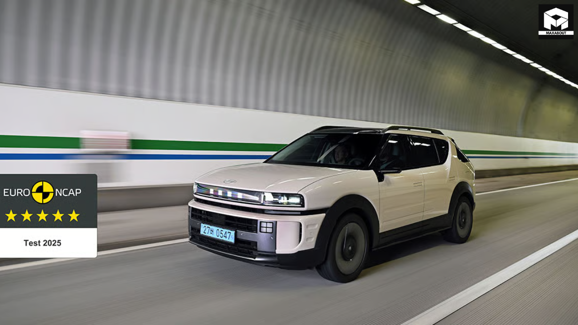
Hyundai Nexo Achieves Top Safety HonorsThe Hyundai Nexo just proved that hydrogen fuel cell vehicles can be just as safe—if not safer—than their gasoline-powered counterparts. Euro NCAP has awarded the Nexo a full 5-star safety rating, and I've got to say, this is a big deal for the hydrogen movemen...
By ankit arora
Automotive Writer
Hyundai Nexo Achieves Top Safety Honors
The Hyundai Nexo just proved that hydrogen fuel cell vehicles can be just as safe—if not safer—than their gasoline-powered counterparts. Euro NCAP has awarded the Nexo a full 5-star safety rating, and I've got to say, this is a big deal for the hydrogen movement.
Here's the thing: many people still view hydrogen cars with skepticism. The technology feels futuristic, and there's always that lingering question about safety. But the Nexo's Euro NCAP results should put a lot of those concerns to rest. This isn't just about meeting minimum standards—it's about excelling across the board.
Breaking Down the Euro NCAP Scores
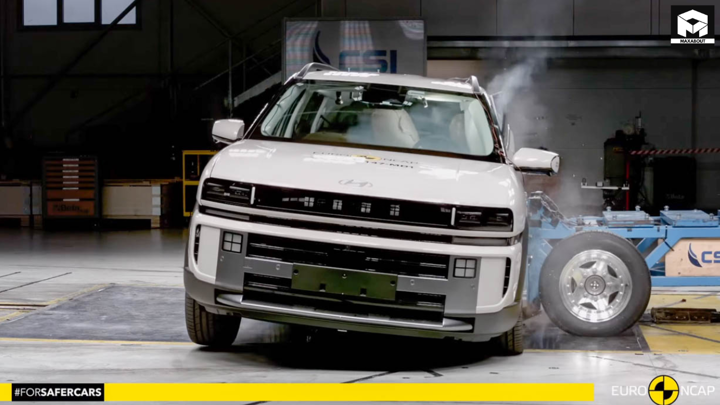
Euro NCAP doesn't mess around with their testing protocols. They evaluate vehicles across four critical categories, and the Nexo performed impressively in each one.
Adult Occupant Protection
The Nexo scored 87% for adult occupant protection, which is genuinely impressive. In frontal offset and side impact tests, the vehicle demonstrated excellent structural integrity. The hydrogen storage tanks—often a source of anxiety for skeptics—remained completely intact throughout all testing scenarios.
What caught my attention is how well the restraint systems performed. The airbags deployed effectively, and the seatbelt pretensioners worked exactly as designed. Euro NCAP noted particularly strong protection for the driver and front passenger's chest and leg areas during frontal collisions.
Child Occupant Protection
For families considering the Nexo, you'll be pleased to know it scored 86% in child occupant protection. The vehicle accommodated child restraint systems well across different age groups, from infant seats to booster seats.
The ISOFIX mounting points are clearly marked and accessible—something that sounds minor until you've struggled to install a car seat in poorly designed anchor points. The side impact protection for children was rated as "good" across all test scenarios.
Vulnerable Road User Protection
Here's where modern safety design really shines: the Nexo achieved 67% for vulnerable road user protection. This category focuses on how the vehicle protects pedestrians and cyclists in the event of a collision.
The bonnet design offers adequate clearance to the hard structures underneath in most impact zones. The active bonnet system—which lifts slightly upon detecting a pedestrian impact—provides additional protection. The autonomous emergency braking system also detects pedestrians and cyclists, actively working to prevent collisions before they happen.
Safety Assist Technologies
The Nexo absolutely crushed this category with an impressive 79% rating for safety assist features. This is where Hyundai's investment in advanced driver assistance systems really pays off.
The vehicle comes equipped with:
- Autonomous Emergency Braking (AEB) that works with both vehicles and vulnerable road users
- Lane Keeping Assist with active steering intervention
- Blind Spot Monitoring with rear cross-traffic alert
- Driver Attention Warning system that monitors for fatigue
- Speed Assistance System that recognizes traffic signs
What Makes the Nexo Structurally Sound
Let's talk about the elephant in the room—or rather, the hydrogen tanks in the car. People often ask me about the safety of storing compressed hydrogen, and I get why that's concerning. But the engineering here is actually fascinating.
Hydrogen Tank Protection
The Nexo stores hydrogen at 700 bar (that's about 10,000 psi for those of us who think in pounds). These tanks are constructed with carbon fiber reinforced polymer and undergo rigorous testing that goes way beyond what you'd expect.
According to industry standards, these tanks are tested to withstand:
- Fire exposure without rupturing
- Gunfire penetration
- Extreme drop tests
- Pressure cycling far beyond operational limits
In the Euro NCAP crash tests, the tanks showed no compromise whatsoever. They're strategically positioned in the vehicle's structure to minimize impact exposure, and multiple redundant safety systems monitor pressure and temperature constantly.
Body Structure and Crumple Zones
The Nexo utilizes high-strength steel in critical areas while maintaining engineered crumple zones that absorb impact energy. This is the same principle used in conventional vehicles, but the packaging challenges are different when you're working around hydrogen storage systems.
Hyundai's engineers created dedicated load paths that channel impact forces around the passenger cell. The A and B pillars showed minimal deformation in side impact tests, maintaining survival space for occupants.
Real-World Safety Beyond Crash Tests
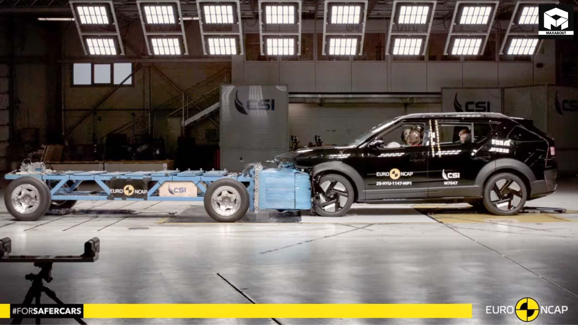
Euro NCAP ratings tell us a lot, but real-world safety extends beyond controlled crash scenarios. The Nexo includes several features that help prevent accidents in the first place—and that's arguably even more important.
Visibility and Design Considerations
I appreciate that Hyundai didn't sacrifice visibility for styling. The A-pillars are relatively slim, and the large windows provide good sightlines. The rearview camera is standard, and the 360-degree camera system available on higher trims makes parking and low-speed maneuvering much safer.
Hydrogen-Specific Safety Features
The Nexo includes safety systems you won't find in conventional vehicles. Multiple hydrogen sensors continuously monitor for leaks, and the vehicle can automatically shut off fuel supply and ventilate the system if needed. The refueling system won't operate unless properly sealed, preventing user error.
There's also a fascinating feature where the vehicle can actually purify air as it drives—the only emissions are water vapor and cleaner air. While not directly safety-related, it speaks to the sophisticated engineering throughout the vehicle.
How Does This Compare to Other Hydrogen Vehicles
The hydrogen passenger vehicle market remains relatively small, but the Nexo's safety performance sets a strong benchmark. The Toyota Mirai, its main competitor, also holds strong safety ratings from various testing organizations.
What's encouraging is that both vehicles demonstrate that hydrogen fuel cell technology doesn't require compromising on safety. In fact, the extensive testing these alternative fuel vehicles undergo often results in conservative, safety-first design approaches that benefit everyone.
What This Means for Hydrogen Vehicle Adoption
Here's my take: safety ratings matter enormously for consumer confidence. Electric vehicles needed strong safety showings to gain mainstream acceptance, and hydrogen vehicles face the same scrutiny—perhaps even more so because the technology feels less familiar to most people.
The Nexo's 5-star Euro NCAP rating removes a significant psychological barrier. When someone asks me whether hydrogen cars are safe, I can point to objective, third-party testing that confirms they absolutely are.
Infrastructure Still Matters More
That said, the biggest challenge for hydrogen vehicles isn't safety—it's infrastructure. You can have the safest, most advanced vehicle in the world, but if you can't refuel it conveniently, adoption will remain limited. Many regions still have minimal hydrogen refueling networks, which restricts where you can realistically own and operate a Nexo.
Should You Consider the Nexo
If you live in an area with hydrogen infrastructure—parts of California, Germany, South Korea, and Japan, for example—the Nexo deserves serious consideration. The safety rating confirms you're not making any compromises on protection for you and your family.
The driving experience is smooth and quiet, similar to battery electric vehicles. The range typically exceeds 400 miles on a full tank, and refueling takes about five minutes—major advantages over current battery electric technology for some users.
However, availability remains limited, and the price point positions it as a premium offering. This is still early-adopter territory, but the technology and safety are clearly there.
Frequently Asked Questions
Is hydrogen safer than gasoline in a crash?
Both fuels have different risk profiles. Hydrogen dissipates quickly due to its low density, while gasoline pools and can ignite. Modern hydrogen vehicles like the Nexo include extensive safety systems that make them comparable to or safer than conventional vehicles in real-world scenarios. The Euro NCAP testing validates this equivalence.
What happens to the hydrogen tanks in a severe collision?
The tanks are designed to remain intact even in severe impacts. They're constructed with multiple layers including carbon fiber reinforcement and undergo testing far beyond what they'll experience in real-world crashes. In Euro NCAP testing, the tanks showed no compromise. Additionally, safety systems can automatically vent hydrogen safely if sensors detect a problem.
Does the Nexo have the same safety features as regular Hyundai vehicles?
Yes, and then some. The Nexo includes Hyundai's full suite of SmartSense safety technologies, plus additional hydrogen-specific monitoring and safety systems. You're getting all the standard modern safety features—AEB, lane keeping, blind spot monitoring—plus the specialized systems that manage the fuel cell powertrain.
How does Euro NCAP test hydrogen vehicles differently?
The core crash test protocols remain the same—frontal impact, side impact, pole test, etc. However, Euro NCAP pays particular attention to the integrity of the hydrogen storage and fuel cell systems during these impacts. The tests verify that these components don't compromise in ways that could create additional hazards.
Conclusion
The Hyundai Nexo's 5-star Euro NCAP rating represents more than just one vehicle's achievement—it's validation for hydrogen fuel cell technology as a whole. The comprehensive safety performance across adult protection, child protection, vulnerable road users, and safety assist technologies demonstrates that alternative fuel vehicles can absolutely match conventional vehicles for occupant safety.
What impresses me most is how thoroughly Hyundai has addressed both the standard safety concerns and the hydrogen-specific considerations. From the robust tank protection to the sophisticated monitoring systems, the engineering reflects a safety-first approach that should give potential buyers confidence.
The hydrogen vehicle market still faces infrastructure and cost challenges that limit mainstream adoption. But when it comes to safety—one of the most fundamental concerns for any vehicle purchase—the Nexo proves that hydrogen technology is ready for prime time. This 5-star rating removes doubt and sets a strong precedent for the hydrogen vehicles that will follow.
Whether hydrogen fuel cells become a major part of our automotive future remains to be seen. But if they do, vehicles like the Nexo show they won't compromise on the safety standards we've come to expect from modern cars. That's an important milestone worth celebrating.
Explore the story
Related news





Share your view and join the discussion.
Earn reward points for every comment and get a chance to win ₹1,000 in our weekly lucky draw. Sign in with Google in one tap.
Start the conversation
No one has commented on this article yet. Be the first to share your view.
Want to read more automotive news?
Stay updated with the latest car launches, reviews, and industry insights.
Browse All News