
Hinduja Plans ₹2,500 Crore Tamil Nadu EV and Clean-Energy Expansion
Hinduja Group has announced a ₹2,500 crore Tamil Nadu commitment spanning electric buses, charging infrastructure, digital mobility services and clean energy. The programme was outlined through an MoU with Guidance Tamil Nadu, so its projects should be described as planned rather than already delive...
Editorial Team
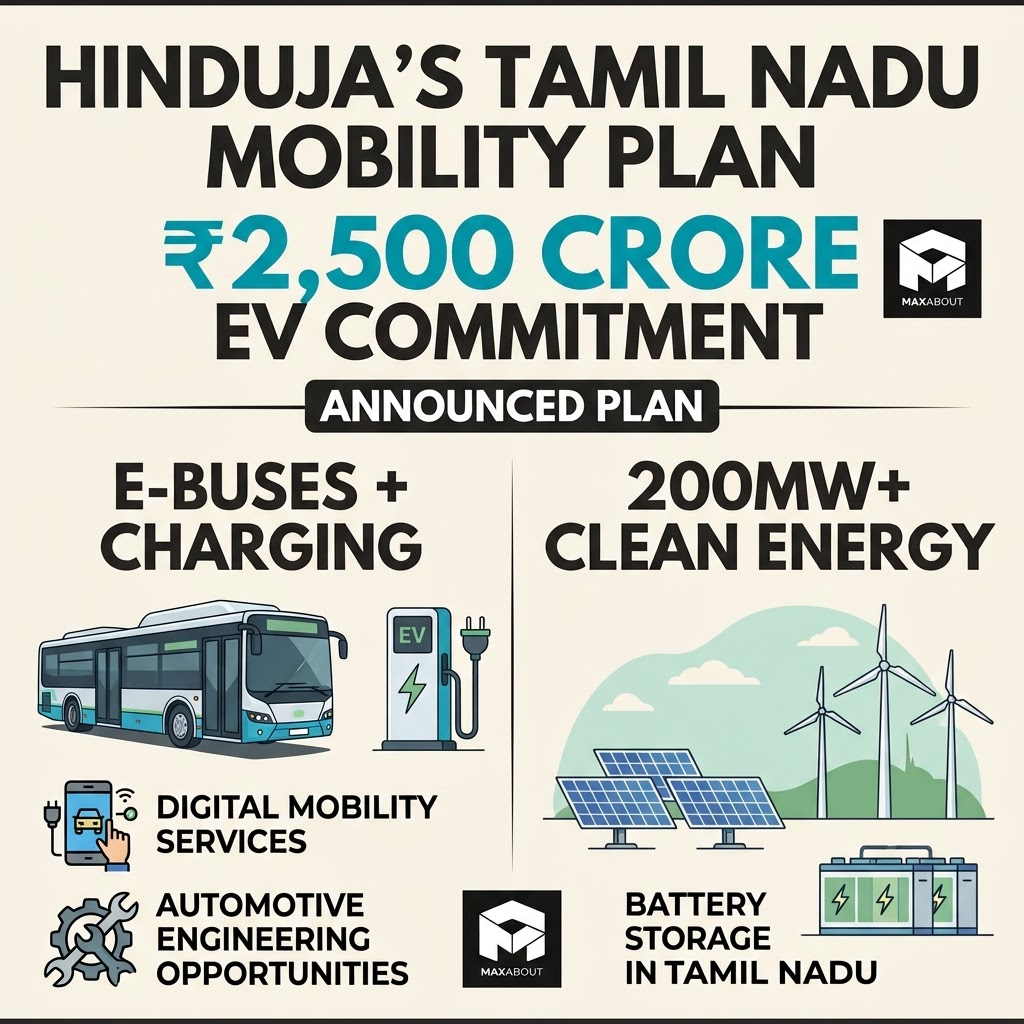
Hinduja Group has announced a ₹2,500 crore Tamil Nadu commitment spanning electric buses, charging infrastructure, digital mobility services and clean energy. The programme was outlined through an MoU with Guidance Tamil Nadu, so its projects should be described as planned rather than already delivered.
What the ₹2,500 crore plan covers
The announced scope links public-transport electrification with the infrastructure needed to support it. OHM Global Mobility is expected to operationalise electric buses and expand mobility services, while the wider plan includes charging networks, digital services and automotive engineering opportunities.
Hinduja Renewables also plans more than 200MW of solar, wind and battery-storage projects across five districts in Tamil Nadu. This creates a broader energy-and-mobility story rather than a vehicle-only investment.
Key announced elements
Investment commitment: ₹2,500 crore.
Electric mobility: planned public electric-bus deployment and mobility services.
Charging: proposed battery-charging networks.
Clean energy: more than 200MW of planned solar, wind and storage projects.
Geography: clean-energy activity across five Tamil Nadu districts.
Why the combined approach matters
Electric-bus deployment depends on more than buying vehicles. Operators need depots, reliable charging, route planning, digital fleet monitoring, trained staff and sufficient electricity supply. Developing these parts together can reduce coordination gaps and improve fleet availability.
Renewable generation and battery storage can also help manage electricity sourcing, although the commercial and grid arrangements for individual projects have not been detailed. The announced 200MW-plus figure is a plan, not a statement of commissioned capacity.
Connection to Hinduja's existing footprint
The report places the new commitment alongside the group's existing Tamil Nadu presence through Ashok Leyland, Switch Mobility and Hinduja Tech. That industrial base may support engineering, manufacturing and operational collaboration across commercial vehicles and mobility services.
It also follows a reported ₹7,500 crore EV-ecosystem agreement from September 2025 and an Ashok Leyland battery-pack plant under construction. The latest commitment adds a fresh layer, but the projects and investment figures should not be combined without clear accounting and timelines.
What has not been disclosed
The number of electric buses to be deployed.
The number and location of charging sites.
A project-by-project investment split.
Construction and commissioning schedules.
Detailed financing, capacity or offtake arrangements.
These missing details will determine how quickly the plan translates into visible transport capacity and clean-energy output.
What to watch next
Useful milestones include signed project agreements, land and regulatory approvals, charging-site tenders, bus orders, renewable-capacity commissioning and clear deployment dates. Reporting those milestones separately will make it easier to distinguish commitments from execution.
Bottom line
Hinduja's ₹2,500 crore Tamil Nadu announcement is notable because it connects e-buses, charging, digital mobility and clean power. That systems approach could strengthen the state's electric-transport ecosystem.
For now, however, the figures describe an MoU-backed commitment. Bus counts, charging locations, project phasing and delivery schedules remain to be announced.
Explore the story
Related news

Share your view and join the discussion.
Earn reward points for every comment and get a chance to win ₹1,000 in our weekly lucky draw. Sign in with Google in one tap.
Start the conversation
No one has commented on this article yet. Be the first to share your view.
Want to read more automotive news?
Stay updated with the latest car launches, reviews, and industry insights.
Browse All News