
Govt Plans 3-Year PUC Validity for New BS-VI Vehicles: Everything You Need to Know
The proposed PUCC 3.0 PUC validity changes could make Pollution Under Control Certificate renewals less frequent for newer BS-VI vehicles in India. As reported, private BS-VI vehicles up to six years old may get a three-year PUC validity window, while older and lower-emission-standard vehicles could...
Editorial Team
The proposed PUCC 3.0 PUC validity changes could make Pollution Under Control Certificate renewals less frequent for newer BS-VI vehicles in India. As reported, private BS-VI vehicles up to six years old may get a three-year PUC validity window, while older and lower-emission-standard vehicles could face shorter renewal intervals. The important caveat: this is still a proposed policy change until a final government notification is issued.
What PUCC 3.0 may change
The proposal is aimed at linking PUC renewal frequency more closely with vehicle emission standard and age. Newer BS-VI vehicles generally have cleaner emission-control systems than older BS-IV, BS-III, BS-II or BS-I vehicles, so the proposed validity periods are more relaxed for newer vehicles and stricter for older categories.
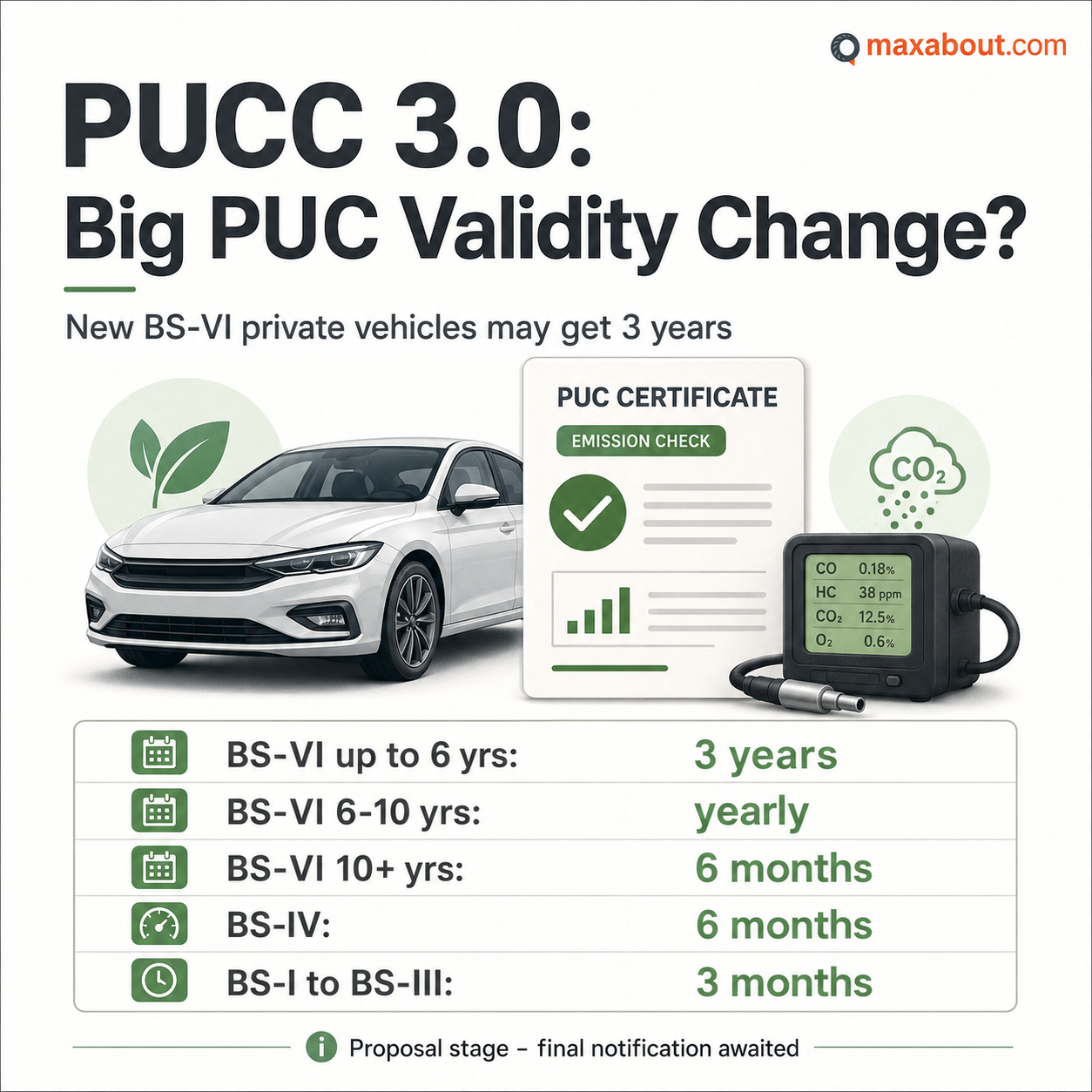
Proposed PUC validity by vehicle category
| Vehicle category | Proposed PUC validity | Status note |
|---|---|---|
| BS-VI private vehicles up to 6 years old | 3 years | Proposal stage |
| BS-VI private vehicles aged 6-10 years | 1 year | Proposal stage |
| BS-VI private vehicles above 10 years | 6 months | Proposal stage |
| BS-IV private vehicles | 6 months | Proposal stage |
| BS-I to BS-III vehicles | 3 months | Proposal stage |
| Commercial BS-VI vehicles up to 6 years old | 2 years | Proposal stage |
Why this matters for owners
For owners of newer BS-VI private cars and bikes, the most practical benefit would be fewer PUC centre visits in the first six years. That can reduce compliance friction, especially for owners who already service vehicles regularly and maintain emission systems properly.
For owners of older BS-IV or pre-BS-IV vehicles, the proposed framework moves in the opposite direction. More frequent renewal intervals would mean owners need to plan PUC checks more carefully and keep vehicles in better emission condition to avoid failed tests or penalties.
Is the new PUC rule final?
No final notification was present in the inspected source context. Until the government formally notifies PUCC 3.0, vehicle owners should treat these intervals as proposed, not active law. Current local enforcement rules continue to matter until the official rollout happens.
Owner checklist
Do not assume the three-year validity is active until a final notification is issued.
Check your vehicle's emission standard and registration age before applying any proposed interval.
Keep the existing PUC certificate valid under the currently enforced rules.
If you own an older BS-IV or BS-III vehicle, prepare for potentially more frequent checks under the proposed framework.
Commercial vehicle owners should separately verify category-specific validity rules.
FAQs
What is PUCC 3.0?
PUCC 3.0 refers to proposed changes around Pollution Under Control Certificate validity and renewal frequency, linked to vehicle age, emission standard and vehicle category.
Will new BS-VI private vehicles get three-year PUC validity?
That is the reported proposal for BS-VI private vehicles up to six years old, but owners should wait for the final government notification before treating it as active.
What happens to older vehicles under the proposal?
Older or lower-emission-standard vehicles may face shorter validity periods, including proposed six-month validity for BS-IV vehicles and three-month validity for BS-I to BS-III vehicles.
Should owners renew their current PUC certificate now?
Yes. Until PUCC 3.0 is officially notified and implemented, owners should keep following currently applicable PUC validity and renewal rules.
The proposed PUCC 3.0 framework could be a major compliance relief for newer BS-VI owners, but it is not a free pass to ignore emissions checks. The best approach is to track the final notification, keep the current PUC valid, and understand where your vehicle sits in the proposed renewal table.
Explore the story
Related news





Share your view and join the discussion.
Earn reward points for every comment and get a chance to win ₹1,000 in our weekly lucky draw. Sign in with Google in one tap.
Start the conversation
No one has commented on this article yet. Be the first to share your view.
Want to read more automotive news?
Stay updated with the latest car launches, reviews, and industry insights.
Browse All News