
Fuel Quality Crackdown Stops Petrol Sales at 2,573 Pumps: What Drivers Should Know
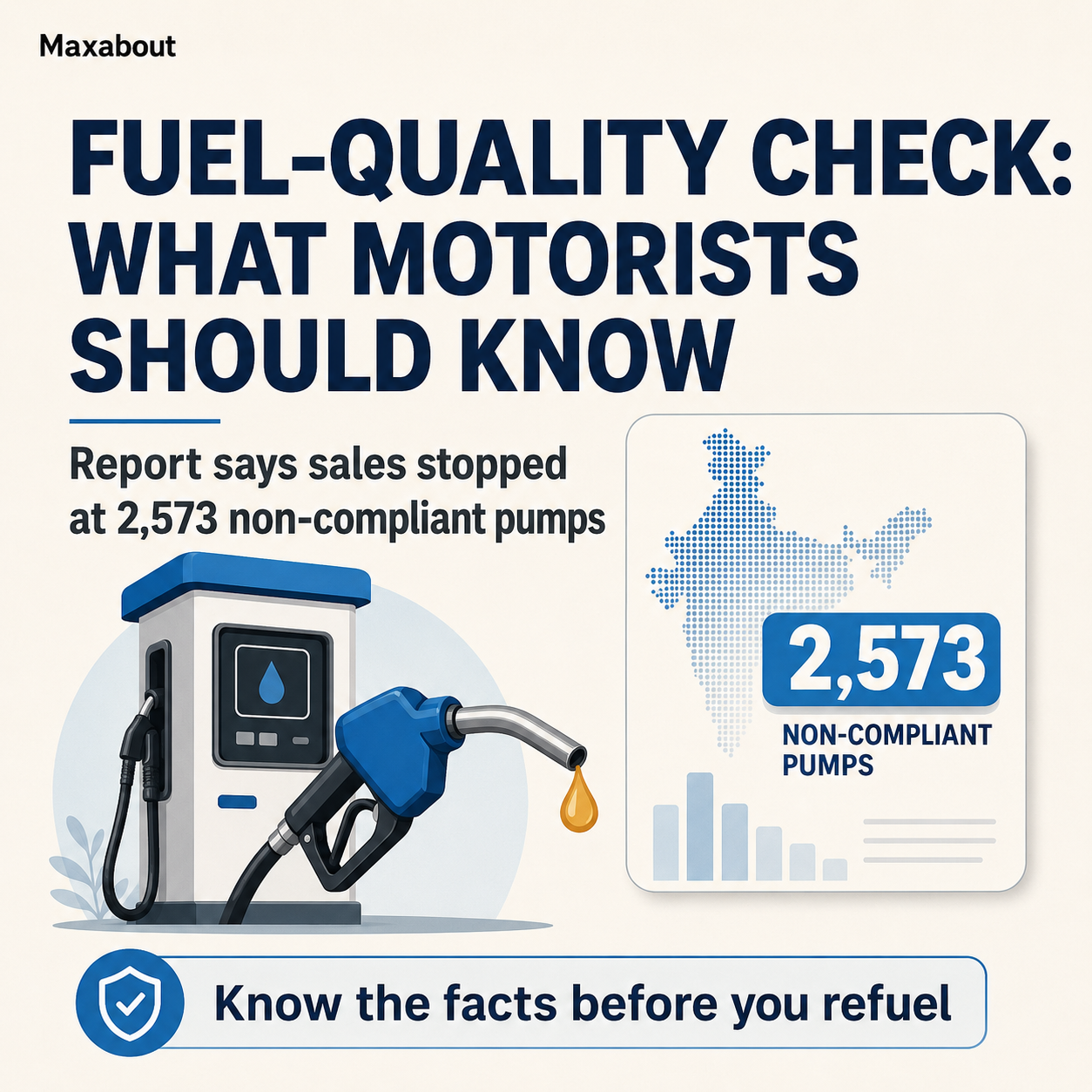
Petrol sales were reportedly stopped at 2,573 non-compliant fuel outlets as of 25 August during a nationwide fuel-quality enforcement drive. The reported total includes 1,257 Indian Oil outlets, 915 Hindustan Petroleum outlets and 401 Bharat Petroleum outlets. The action followed concerns involving ...
Editorial Team
Petrol sales were reportedly stopped at 2,573 non-compliant fuel outlets as of 25 August during a nationwide fuel-quality enforcement drive. The reported total includes 1,257 Indian Oil outlets, 915 Hindustan Petroleum outlets and 401 Bharat Petroleum outlets. The action followed concerns involving water and chloride contamination, but it should not be interpreted as proof that E20 petrol itself is defective or that every outlet under a particular brand is affected.
Fuel-quality enforcement numbers
| Oil marketing company | Reported outlets where sales stopped |
|---|---|
| Indian Oil Corporation | 1,257 |
| Hindustan Petroleum Corporation | 915 |
| Bharat Petroleum Corporation | 401 |
| Total | 2,573 |
The wider audit reportedly covered 84,687 fuel stations, while water-ingress testing was underway across 88,995 dealerships. These figures describe a broad checking exercise, not a claim that all inspected outlets failed.
What contamination can mean for a vehicle
Water, excessive chloride or other contaminants can interfere with combustion and may affect pumps, injectors and other fuel-system components. The actual effect depends on the contaminant, concentration, quantity of fuel used and vehicle design. A rough idle or warning light after refuelling is not enough to prove contaminated fuel without inspection and testing.
Possible signs that deserve attention include difficult starting, hesitation, misfiring, sudden loss of power, abnormal engine noise or a warning light appearing soon after a fill-up. The safest response is to avoid repeated driving if the vehicle is running poorly and arrange professional inspection.
What drivers should preserve after a suspected bad fill
Fuel bill or digital receipt: keep the outlet, date, time, product grade and amount.
Payment record: retain the card, UPI or wallet transaction if the printed bill is missing.
Photos and notes: record the odometer, fuel gauge, warning lights and when symptoms began.
Workshop diagnosis: request a written job card and a clear record of any fuel sample or replaced component.
Communication trail: keep complaint numbers and written responses from the outlet, oil company and vehicle manufacturer.
Avoid authorising disposal of the entire fuel sample or replaced parts before the complaint process is understood. If a sample is taken, ask how it will be sealed, labelled, stored and tested.
Why this is not simply an E20 verdict
E20 identifies petrol blended with up to 20% ethanol under India's fuel programme. Contamination by water or inappropriate chloride levels is a separate quality-control issue. Ethanol can interact with water, storage systems and compatible materials, but a non-compliant sample does not establish that properly produced and stored E20 is universally unsafe.
The enforcement story is therefore about manufacturing, transport, storage, dealership handling and testing discipline. It should not be used to make a blanket claim about every E20 outlet or every E20-compatible vehicle.
What remains unverified publicly
The current reporting does not provide a complete public list of every affected outlet. Automaker sample data and correspondence also require careful interpretation: the report notes that industry figures needed further verification and that some leaked-material interpretations were disputed. Drivers should rely on documented outlet-specific evidence rather than viral lists or brand-wide assumptions.
How to make a fuel-quality complaint
Inform the outlet manager and request a written complaint acknowledgement.
Contact the oil marketing company's customer-care channel with the bill and outlet details.
Ask the workshop to document symptoms, diagnostic codes and sample observations.
Escalate through the relevant consumer-grievance system if the response is inadequate.
For a significant repair or disputed claim, obtain independent technical and legal advice before settling.
FAQs
How many petrol pumps reportedly stopped sales?
The reported count was 2,573 non-compliant outlets as of 25 August.
Does this mean E20 petrol is unsafe?
No. The action concerns fuel-quality compliance and contamination concerns. It does not prove that compliant E20 petrol itself is defective.
How can I prove where I bought the fuel?
Keep the bill or digital payment record, note the outlet and pump details, and preserve the workshop job card and any fuel-sample documentation.
Should I keep driving if the engine runs badly after refuelling?
Repeated driving can worsen some fuel-system problems. If symptoms are severe, stop safely and seek professional assistance rather than continuing to diagnose the issue on the road.
The petrol pump fuel contamination India crackdown is a reminder that enforcement data and owner evidence both matter. A transparent outlet list, reliable sampling and well-documented complaints would help protect motorists without creating unsupported panic about E20.
Explore the story
Related news




Share your view and join the discussion.
Earn reward points for every comment and get a chance to win ₹1,000 in our weekly lucky draw. Sign in with Google in one tap.
Start the conversation
No one has commented on this article yet. Be the first to share your view.
Want to read more automotive news?
Stay updated with the latest car launches, reviews, and industry insights.
Browse All News