
Electrified Cars Reach 49.1 percent of India’s ₹30-Lakh-Plus Registrations
Electrified vehicles accounted for 49.1% of passenger-vehicle registrations in India’s ₹30-lakh-plus segment during January–May 2026, according to JATO Dynamics data reported in the automotive press. The number combines battery-electric vehicles (BEVs), hybrids and plug-in hybrids (PHEVs); it is not...
Editorial Team
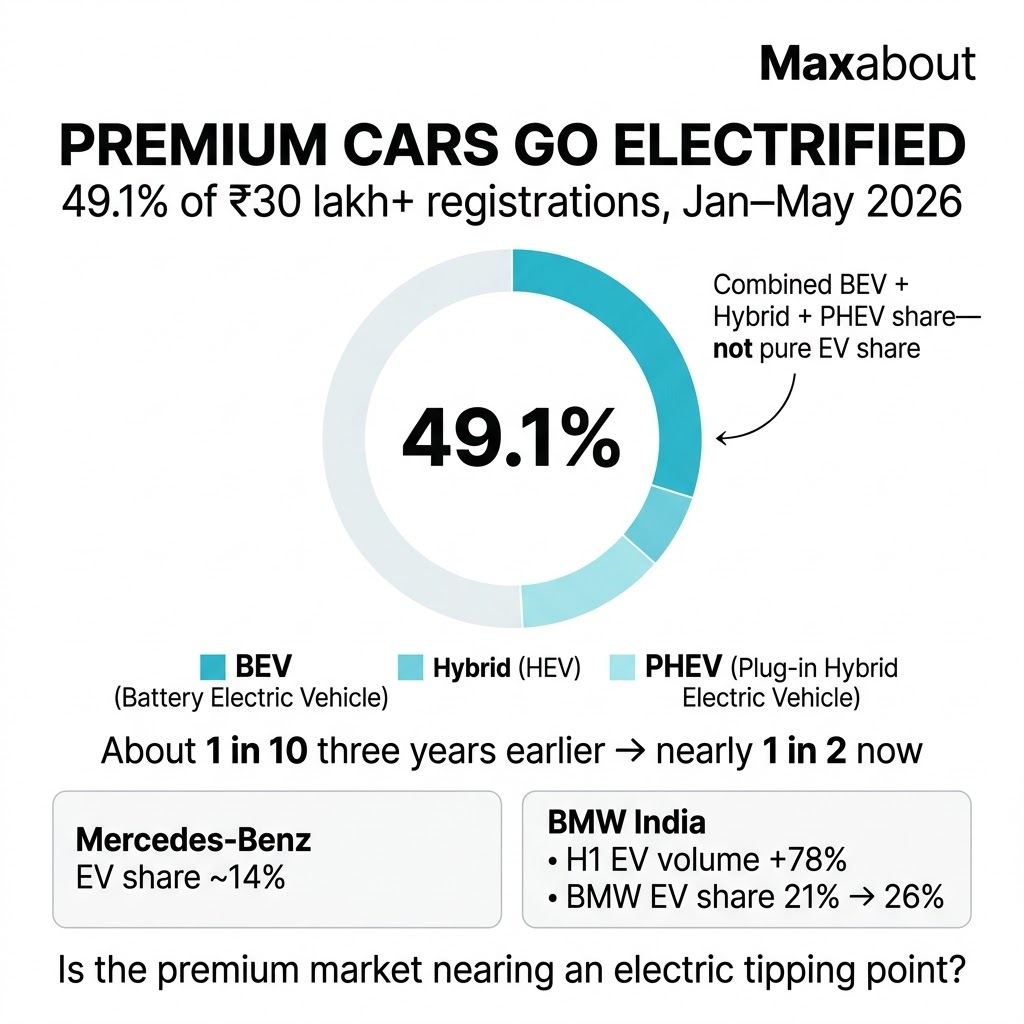
Electrified vehicles accounted for 49.1% of passenger-vehicle registrations in India’s ₹30-lakh-plus segment during January–May 2026, according to JATO Dynamics data reported in the automotive press. The number combines battery-electric vehicles (BEVs), hybrids and plug-in hybrids (PHEVs); it is not a pure-EV market-share figure. Even with that important distinction, the result shows how quickly electrified powertrains are becoming mainstream among premium-car buyers, up from roughly one in ten registrations three years earlier.
What you need to know
Electrified models represented 49.1% of ₹30-lakh-plus registrations in January–May 2026.
The figure combines BEVs, hybrids and PHEVs.
The comparable share was reported at about one in ten three years earlier.
Mercedes-Benz India says EVs contribute about 14% of its sales.
BMW India reported first-half EV volume up 78%, with EV share rising from 21% to 26%.
What does “electrified” include?
Battery-electric vehicles run entirely on stored electricity and have no combustion engine. Hybrids combine an engine with an electric motor and generally recharge through driving and regenerative braking. Plug-in hybrids add a larger externally chargeable battery while retaining an engine.
Grouping these technologies is useful for measuring the shift away from purely combustion-powered cars, but buyers should not read the 49.1% figure as EV-only adoption. The mix also reflects the different compromises premium customers are willing to make around charging access, range and driving patterns.
Premium electrification: the key reported numbers
| Measure | Reported figure |
|---|---|
| Electrified share above ₹30 lakh | 49.1%, January–May 2026 |
| Comparable share three years earlier | About one in ten |
| Mercedes-Benz India EV contribution | About 14% of sales |
| BMW India first-half EV volume growth | 78% |
| BMW India EV share movement | 21% to 26% |
Why premium buyers are shifting faster
Customers in higher price bands typically have greater access to home or workplace charging and are more able to absorb the initial price premium of new technology. They also have a wider choice of electric SUVs, luxury sedans and strong hybrids than buyers in many lower segments.
Performance is another factor. Electric motors deliver immediate torque and quiet operation, while hybrids can improve urban efficiency without requiring every journey to depend on public charging. Premium buyers may also value technology, refinement and lower local emissions as part of the ownership experience.
Why the shift is not complete
Charging availability and residual values remain cited barriers. Apartment residents may not have dependable private charging, public fast-charging quality can vary, and used-vehicle buyers are still learning how to value battery condition. Hybrids and PHEVs can act as transitional choices for customers who want electric assistance but are not ready for a BEV.
What it means for Indian buyers and carmakers
For buyers, the ₹30-lakh-plus market now offers three distinct electrified paths rather than a simple petrol-versus-EV decision. The right choice depends on daily distance, access to charging, highway use and expected ownership duration. A BEV can suit owners with predictable charging; a hybrid can work for mixed use without a plug; a PHEV only delivers its best efficiency when charged regularly.
For carmakers, the data suggests electrified variants are moving from halo products toward a central part of premium product planning. Charging partnerships, battery warranties, resale programmes and transparent efficiency claims will become as important as launches.
FAQs
Does 49.1% mean half of premium cars are fully electric?
No. The 49.1% figure combines BEVs, hybrids and PHEVs in the ₹30-lakh-plus segment.
What period does the data cover?
The reported JATO Dynamics registration data covers January through May 2026.
Why are premium buyers adopting electrified cars faster?
Greater charging access, wider model choice, stronger purchasing power, performance and refinement all contribute, although the mix includes hybrids as well as fully electric cars.
Conclusion
The rise of electrified premium cars in India is now large enough to reshape the ₹30-lakh-plus market. The 49.1% combined share shows a rapid move toward BEVs, hybrids and PHEVs, while also reminding readers to separate full-electric adoption from the broader electrified category. Charging access, resale confidence and clear ownership economics will determine how quickly the next half of the segment changes.
No comments yet
Be the first to share your thoughts!
Want to read more automotive news?
Stay updated with the latest car launches, reviews, and industry insights.
Browse All News