
Delhi-NCR Light Goods Vehicle EV Rules: What CAQM’s 2027 Phase-In Means
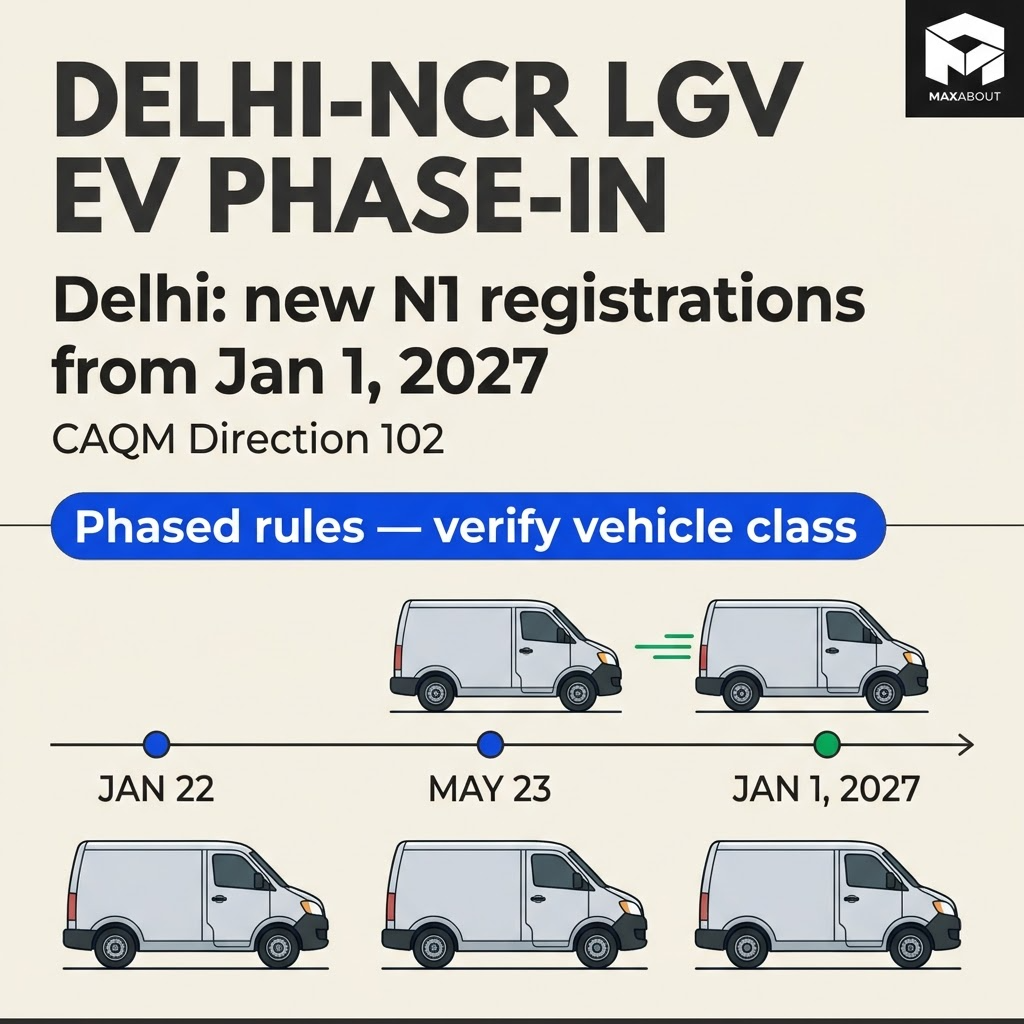
Delhi-NCR light goods vehicle EV rules are set to tighten in phases after CAQM approved Direction 102. The clearest reported starting point is January 1, 2027, when new N1 light-goods vehicle registrations in Delhi are expected to move to an electric-only requirement. The change concerns new registr...
Editorial Team
Delhi-NCR light goods vehicle EV rules are set to tighten in phases after CAQM approved Direction 102. The clearest reported starting point is January 1, 2027, when new N1 light-goods vehicle registrations in Delhi are expected to move to an electric-only requirement. The change concerns new registrations, not a blanket order to remove every existing petrol or diesel commercial vehicle from the road.
What you need to know
Policy: CAQM has approved Direction 102 for a phased cleaner light-goods vehicle transition.
Delhi start: Independent reporting places the new N1 registration phase from January 1, 2027.
Scope: This is about new registrations; fleet owners should verify the exact vehicle class and local phase before ordering.
Which vehicles are affected?
N1 and N2 are regulatory classes used for goods-carrying vehicles. The immediate buyer question is not simply whether a vehicle is a van or a pickup; it is the class shown in its homologation and registration documents. Operators should therefore confirm the category with the dealer, financier and registering authority before changing a purchase plan.
What fleet operators should do now
Map every planned new vehicle purchase against its intended registration location and goods-vehicle class.
Ask for written confirmation of the rule applicable on the expected registration date.
Compare payload, route distance, charging access and downtime before replacing a diesel vehicle with an EV.
Keep financing, delivery and registration timing separate: an order placed earlier may still be registered after a new phase begins.
Why the policy matters
For delivery, retail-supply and last-mile fleets, the rule shifts the decision from a future technology watch to a near-term procurement question. An EV can reduce local tailpipe emissions, but suitability still depends on payload, daily kilometres, charging windows and operational backup. The policy should not be read as proof that every electric light-goods vehicle fits every route.
Known timeline
| Detail | What is known |
|---|---|
| Direction | CAQM Direction 102 was approved in August 2026. |
| Delhi N1 phase | Reported to begin January 1, 2027 for new registrations. |
| Wider NCR phases | Phased expansion is reported; exact dates and classes need checking against the final direction. |
FAQs
Does the rule ban existing diesel delivery vehicles?
No blanket immediate ban is established by the information used here. The reported change is focused on new registrations.
When do Delhi N1 registrations change?
Independent reporting identifies January 1, 2027. Buyers should confirm the exact applicable class and timing before registration.
Should a fleet switch immediately?
Not automatically. Evaluate payload, charging, route pattern, finance and the precise registration rule for each vehicle.
The Delhi-NCR light goods vehicle EV phase-in gives fleets a clear reason to verify upcoming purchases early. The practical next step is to match each planned registration to the final CAQM direction rather than relying on a headline alone.
Explore the story
Related news

Share your view and join the discussion.
Earn reward points for every comment and get a chance to win ₹1,000 in our weekly lucky draw. Sign in with Google in one tap.
Start the conversation
No one has commented on this article yet. Be the first to share your view.
Want to read more automotive news?
Stay updated with the latest car launches, reviews, and industry insights.
Browse All News