
3 min read
178 views
Hyundai Venue Compact SUV Officially Revealed in India
Hyundai Venue compact SUV has been officially unveiled in India. The brand simultaneously also unveiled the car at the 2019 New York Auto Show. After the launch in India on May 21, the car would be competing with other compact SUVs like Ford EcoSport, Maruti Suzuki Vitara Brezza, Honda WR-V, Tata Ne...
Hyundai Venue compact SUV has been officially unveiled in India. The brand simultaneously also unveiled the car at the 2019 New York Auto Show. After the launch in India on May 21, the car would be competing with other compact SUVs like Ford EcoSport, Maruti Suzuki Vitara Brezza, Honda WR-V, Tata Nexon, and the Mahindra XUV300. The Venue SUV will be available with 3 engine options: 1.2-litre petrol, 1.0-litre turbocharged petrol, and 1.4-litre turbocharged diesel.
 The 1.2L naturally-aspirated petrol engine is good for 83 HP and 115 NM, and it comes with a 5-speed gearbox as standard. The 1.0L turbocharged petrol engine generates a maximum power of 120 HP and a maximum torque of 172 NM. This engine comes with 2 gearbox options: 6-speed manual and 7-speed automatic (DCT). The 1.4L turbocharged diesel engine is good for 90 HP and 220 NM, and it comes with a 6-speed manual transmission. For now, the 7-speed automatic gearbox is only available on the 1.0L turbocharged petrol engine.
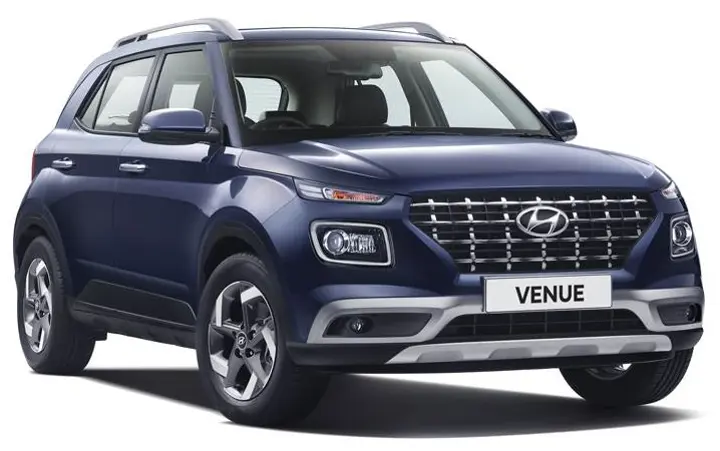
Hyundai Venue is 3995mm in length, 1770mm in width, 1590mm in height, and the wheelbase of the SUV stands at 2500mm. As far as the design is concerned, the Venue SUV features Tata Harrier-like headlight styling which comes with a daytime running light setup that runs completely around the casing, surrounding the primary projector headlight. The front grille comes with iconic Hyundai designing and 3D wave effect that is not seen on other cars in the brand's lineup.
The 1.2L naturally-aspirated petrol engine is good for 83 HP and 115 NM, and it comes with a 5-speed gearbox as standard. The 1.0L turbocharged petrol engine generates a maximum power of 120 HP and a maximum torque of 172 NM. This engine comes with 2 gearbox options: 6-speed manual and 7-speed automatic (DCT). The 1.4L turbocharged diesel engine is good for 90 HP and 220 NM, and it comes with a 6-speed manual transmission. For now, the 7-speed automatic gearbox is only available on the 1.0L turbocharged petrol engine.
Hyundai Venue is 3995mm in length, 1770mm in width, 1590mm in height, and the wheelbase of the SUV stands at 2500mm. As far as the design is concerned, the Venue SUV features Tata Harrier-like headlight styling which comes with a daytime running light setup that runs completely around the casing, surrounding the primary projector headlight. The front grille comes with iconic Hyundai designing and 3D wave effect that is not seen on other cars in the brand's lineup.
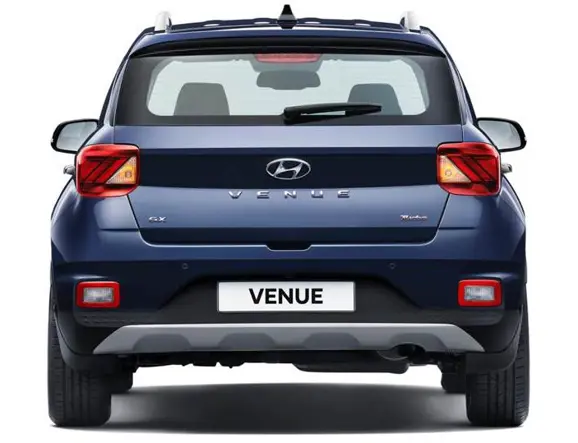 The lower section comes with silver-finished faux bash plate on the new Hyundai Venue SUV. The front fascia has the most youthful design language in comparison to all the rivals while the rear is decently designed with Volkswagen Polo-like taillamps and sporty bumper finish. The C-pillar section of the SUV is mildly inspired by the Hyundai Creta. The Venue SUV comes with dual front airbags, and ISOFIX child-seat mounts as standard on all the variants. The top-end model is equipped with 6 airbags, ESC, hill-assist control and brake assist.
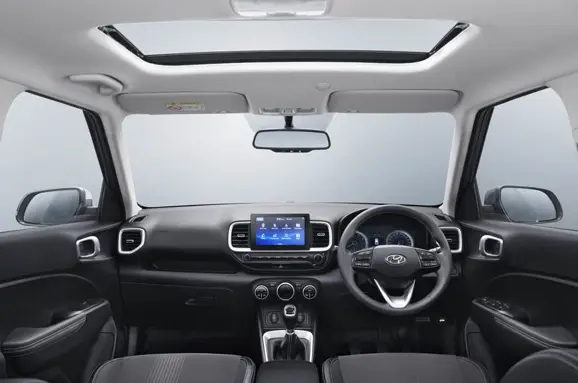 When it comes to Interior, the Hyundai Venue compact SUV features the most elegant design among all of its rivals with a completely black finish and highlighted silver sections around the vents and dials. The climate control system is fully automatic on the car. The BlueLink system brings 33 safety-enhancing features on the Venue SUV with voice recognition and search option as a segment-first feature.
Hyundai has equipped the car with an 8.0-inch floating touchscreen infotainment system while the steering wheel also looks sporty with black/silver finish matching with the centre console and the dashboard. Hyundai Venue compact SUV is expected to get a starting ex-showroom price tag of INR 8 lakh while the top-end model is expected to be priced around INR 12 lakh.
When it comes to Interior, the Hyundai Venue compact SUV features the most elegant design among all of its rivals with a completely black finish and highlighted silver sections around the vents and dials. The climate control system is fully automatic on the car. The BlueLink system brings 33 safety-enhancing features on the Venue SUV with voice recognition and search option as a segment-first feature.
Hyundai has equipped the car with an 8.0-inch floating touchscreen infotainment system while the steering wheel also looks sporty with black/silver finish matching with the centre console and the dashboard. Hyundai Venue compact SUV is expected to get a starting ex-showroom price tag of INR 8 lakh while the top-end model is expected to be priced around INR 12 lakh.
The 1.2L naturally-aspirated petrol engine is good for 83 HP and 115 NM, and it comes with a 5-speed gearbox as standard. The 1.0L turbocharged petrol engine generates a maximum power of 120 HP and a maximum torque of 172 NM. This engine comes with 2 gearbox options: 6-speed manual and 7-speed automatic (DCT). The 1.4L turbocharged diesel engine is good for 90 HP and 220 NM, and it comes with a 6-speed manual transmission. For now, the 7-speed automatic gearbox is only available on the 1.0L turbocharged petrol engine.
Hyundai Venue is 3995mm in length, 1770mm in width, 1590mm in height, and the wheelbase of the SUV stands at 2500mm. As far as the design is concerned, the Venue SUV features Tata Harrier-like headlight styling which comes with a daytime running light setup that runs completely around the casing, surrounding the primary projector headlight. The front grille comes with iconic Hyundai designing and 3D wave effect that is not seen on other cars in the brand's lineup.
The lower section comes with silver-finished faux bash plate on the new Hyundai Venue SUV. The front fascia has the most youthful design language in comparison to all the rivals while the rear is decently designed with Volkswagen Polo-like taillamps and sporty bumper finish. The C-pillar section of the SUV is mildly inspired by the Hyundai Creta. The Venue SUV comes with dual front airbags, and ISOFIX child-seat mounts as standard on all the variants. The top-end model is equipped with 6 airbags, ESC, hill-assist control and brake assist.
When it comes to Interior, the Hyundai Venue compact SUV features the most elegant design among all of its rivals with a completely black finish and highlighted silver sections around the vents and dials. The climate control system is fully automatic on the car. The BlueLink system brings 33 safety-enhancing features on the Venue SUV with voice recognition and search option as a segment-first feature.
Hyundai has equipped the car with an 8.0-inch floating touchscreen infotainment system while the steering wheel also looks sporty with black/silver finish matching with the centre console and the dashboard. Hyundai Venue compact SUV is expected to get a starting ex-showroom price tag of INR 8 lakh while the top-end model is expected to be priced around INR 12 lakh.Ad
I
Immanuel Raja is an Automotive Writer with 8 years of experience covering the Indian automotive landscape. He specializes in Electric Vehicles and Hybrid Technology, with particular expertise in battery systems, charging infrastructure, and the integration of alternative powertrains in Indian road conditions. Raja has extensively tested over 200 vehicles across various segments, from entry-level EVs to premium hybrids, developing nuanced insights into their performance on India's diverse and challenging roads. His analysis encompasses both technical specifications and practical ownership considerations that matter to Indian consumers, including charging accessibility, maintenance costs, and performance in extreme weather conditions. With a finger on the pulse of India's evolving automotive preferences, Raja delivers clear, factual assessments that help readers navigate the transition to electrified mobility in the context of India's unique market dynamics.
About the Author
Explore the story
Related news



Comments
Share your view and join the discussion.
Start with:
Earn reward points for every comment and get a chance to win ₹1,000 in our weekly lucky draw. Sign in with Google in one tap.
Start the conversation
No one has commented on this article yet. Be the first to share your view.
Want to read more automotive news?
Stay updated with the latest car launches, reviews, and industry insights.
Browse All News