
2 min read
231 views
Auto Industry Slowdown: 20% EV Dealers Exit Business in India
20% EV Dealers Exit Business in India: The electric revolution may not feel as effective as the government was planning for the masses as 20% of the electric vehicle dealerships closed business in the last fiscal. The number of dealerships is now limited to 860, challenging not even the decent brand...
20% EV Dealers Exit Business in India: The electric revolution may not feel as effective as the government was planning for the masses as 20% of the electric vehicle dealerships closed business in the last fiscal. The number of dealerships is now limited to 860, challenging not even the decent brands having petrol-powered engines on their side.
For one clear example, Hero Motocorp, the largest Indian two-wheeler brand, has more than 6000 touch points around the country. The reason for this shutdown of electric vehicle dealerships in the increase in pricing for the products that brought a direct downfall in the number of customers in the country.
The FAME II scheme from the government has directed the brands to use Li-ion battery and many other advanced functions to keep up with the incentive policy and thus, the production cost for every product has gone up by a considerable margin. The benefits are passed on to the customer but practically, the technology is not affordable enough to manage the market in a profitable way.
[caption id="attachment_512844" align="aligncenter" width="850"] Auto Industry Slowdown: 20% EV Dealers Exit Business in India[/caption]
The second limitation is the availability of charging stations. The least number of charging stations means less interested buyers that have uncertain travel routines. The swappable battery function may help the brands secure some customers for sure.
Almost every model in the electric industry has to undergo a considerable amount of change, starting with the replacement of battery and certifying themselves again with the ARAI. Here is what the industry leaders have to say about the process.
“This process itself generally means two to two-and-a-half months. Then, there will be few manufacturers who were earlier supplying. There were 26 or 30 models and obviously every model has to be certified but this also means a long waiting line. That, perhaps, the policymaker did not realize that they are going to almost stop the business for two months,” says Sohinder Gill, Director, Society of Manufacturers of Electric Vehicles (SMEV).
[caption id="attachment_507489" align="aligncenter" width="850"]
Auto Industry Slowdown: 20% EV Dealers Exit Business in India[/caption]
The second limitation is the availability of charging stations. The least number of charging stations means less interested buyers that have uncertain travel routines. The swappable battery function may help the brands secure some customers for sure.
Almost every model in the electric industry has to undergo a considerable amount of change, starting with the replacement of battery and certifying themselves again with the ARAI. Here is what the industry leaders have to say about the process.
“This process itself generally means two to two-and-a-half months. Then, there will be few manufacturers who were earlier supplying. There were 26 or 30 models and obviously every model has to be certified but this also means a long waiting line. That, perhaps, the policymaker did not realize that they are going to almost stop the business for two months,” says Sohinder Gill, Director, Society of Manufacturers of Electric Vehicles (SMEV).
[caption id="attachment_507489" align="aligncenter" width="850"]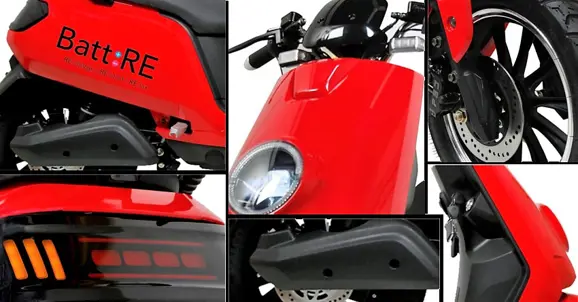 BattRE Electric Scooter Officially Launched at INR 63,555[/caption]
Source
BattRE Electric Scooter Officially Launched at INR 63,555[/caption]
Source
Auto Industry Slowdown: 20% EV Dealers Exit Business in India[/caption]
The second limitation is the availability of charging stations. The least number of charging stations means less interested buyers that have uncertain travel routines. The swappable battery function may help the brands secure some customers for sure.
Almost every model in the electric industry has to undergo a considerable amount of change, starting with the replacement of battery and certifying themselves again with the ARAI. Here is what the industry leaders have to say about the process.
“This process itself generally means two to two-and-a-half months. Then, there will be few manufacturers who were earlier supplying. There were 26 or 30 models and obviously every model has to be certified but this also means a long waiting line. That, perhaps, the policymaker did not realize that they are going to almost stop the business for two months,” says Sohinder Gill, Director, Society of Manufacturers of Electric Vehicles (SMEV).
[caption id="attachment_507489" align="aligncenter" width="850"] BattRE Electric Scooter Officially Launched at INR 63,555[/caption]
SourceAd
I
Immanuel Raja is an Automotive Writer with 8 years of experience covering the Indian automotive landscape. He specializes in Electric Vehicles and Hybrid Technology, with particular expertise in battery systems, charging infrastructure, and the integration of alternative powertrains in Indian road conditions. Raja has extensively tested over 200 vehicles across various segments, from entry-level EVs to premium hybrids, developing nuanced insights into their performance on India's diverse and challenging roads. His analysis encompasses both technical specifications and practical ownership considerations that matter to Indian consumers, including charging accessibility, maintenance costs, and performance in extreme weather conditions. With a finger on the pulse of India's evolving automotive preferences, Raja delivers clear, factual assessments that help readers navigate the transition to electrified mobility in the context of India's unique market dynamics.
About the Author
Explore the story
Related news

Comments
Share your view and join the discussion.
Start with:
Earn reward points for every comment and get a chance to win ₹1,000 in our weekly lucky draw. Sign in with Google in one tap.
Start the conversation
No one has commented on this article yet. Be the first to share your view.
Want to read more automotive news?
Stay updated with the latest car launches, reviews, and industry insights.
Browse All News