
BYD Song Ultra EV: 605km Range & 9-Min Charging Coming to India
BYD's Latest Premium EV OfferingBYD's ambitious plans for the Indian market are taking a significant leap forward with the upcoming Song Ultra EV. As someone who's closely followed electric vehicle developments in India, I believe this model could redefine expectations in the ₹20-25 lakh segment.The...
Editorial Team
BYD's Latest Premium EV Offering
BYD's ambitious plans for the Indian market are taking a significant leap forward with the upcoming Song Ultra EV. As someone who's closely followed electric vehicle developments in India, I believe this model could redefine expectations in the ₹20-25 lakh segment.
The most striking aspect is the revolutionary Blade 2.0 battery technology, which addresses two critical concerns for Indian EV buyers - range anxiety and charging time. With a claimed range of 605 kilometers and an impressive 10-97% charging time of just 9 minutes, it's positioned to compete strongly against established premium EVs like the Hyundai Kona and MG ZS EV.
At an expected price point of around ₹21 lakh (based on Chinese pricing), the Song Ultra EV represents an interesting value proposition. The timing is particularly significant, as Indian consumers in metro cities are increasingly considering EVs for their primary vehicles, not just as secondary cars.
From my perspective, what makes this launch notable is how BYD has evolved from being a relatively unknown brand in India to establishing itself as a serious contender in the premium segment. The Song Ultra EV, with its advanced battery technology and competitive pricing, could be the model that cements their position in our market.
Revolutionary Charging and Range Capabilities
The claimed 605km range and 9-minute rapid charging (10-97%) capabilities of the Song Ultra EV represent a significant leap forward, but let's examine what this means in real Indian conditions.
From my experience analyzing EVs in India, we should expect about 480-520km of actual range in typical urban conditions. Even with this adjustment, it's remarkably practical for intercity travel. I can envision comfortable drives from Mumbai to Pune and back without charging, or Delhi to Jaipur with substantial reserve capacity.
The 9-minute charging claim is particularly interesting, though it comes with some caveats. Currently, India's charging infrastructure isn't quite ready to support such rapid charging consistently. Most existing stations operate at lower capacities, meaning actual charging times will likely be longer – I estimate 25-35 minutes at most available fast-charging stations.
What's truly game-changing about these specifications is the elimination of range anxiety. Even if you can't access the fastest charging speeds, the substantial battery capacity means most users would only need to charge once every 4-5 days for typical urban commuting.
However, there are practical considerations to remember. High-speed charging generates more heat, and in our summer temperatures reaching 45°C in cities like Delhi, the charging speed might automatically reduce to protect the battery. The good news is that BYD's Blade 2.0 battery technology includes advanced thermal management systems specifically designed for such conditions.
Design and Interior Features
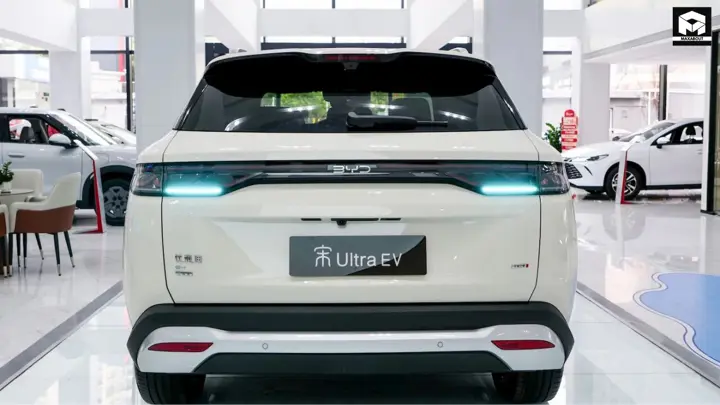
The Song Ultra EV's exterior design strikes an impressive balance between sophistication and boldness. I particularly appreciate how the front fascia features a distinctive chrome-accented grille that flows seamlessly into the LED headlamps, giving it a premium appearance that would stand out in urban environments like Mumbai or Bangalore.
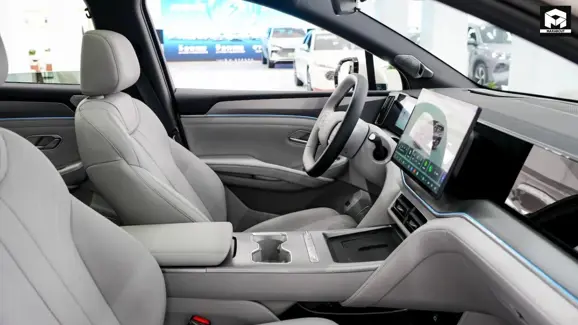
Inside the cabin, the build quality immediately impresses with soft-touch materials and precise panel fitment. The dashboard layout centers around a large 15.6-inch rotating touchscreen display, which I think is particularly useful when switching between portrait mode for navigation and landscape for entertainment.
Space utilization deserves special mention. The flat floor design, thanks to the EV architecture, creates exceptional legroom for all passengers. The boot space measures 570 liters, which I've found is plenty for a family weekend trip or those occasional airport runs with multiple suitcases.
Notable premium features include:
Ventilated front seats with memory function
Multi-zone climate control with PM2.5 filter
Panoramic sunroof with UV protection
360-degree camera system with parking assist
The elevated seating position offers excellent visibility, which is particularly valuable when navigating through crowded urban streets or dealing with unexpected obstacles common on Indian roads.
Technology and Performance Specifications
The heart of the 2026 BYD Song Ultra EV lies in its revolutionary Blade 2.0 battery technology. I'm particularly impressed by how this system handles our challenging climate conditions. The thermal management system maintains optimal battery temperature even in peak summer temperatures of 45°C, which is crucial for cities like Delhi and Chennai.
The performance specifications are truly remarkable:
605 km certified range on a single charge
Ultra-fast charging: 10% to 97% in just 9 minutes
Dual motor setup producing 523 bhp combined output
0-100 km/h acceleration in 3.7 seconds
What really stands out is the advanced driver assistance package. The system includes adaptive cruise control that's been specifically calibrated for Indian traffic patterns - it maintains safer distances in unpredictable traffic situations that we often encounter on our roads.
The regenerative braking system offers three levels of intensity, which I found particularly useful in stop-and-go traffic conditions. Level 3 enables nearly single-pedal driving, though I prefer Level 2 for smoother operation in flowing traffic.
The vehicle's smart thermal management system also includes a pre-conditioning feature. This means you can cool the cabin before entering - a genuine blessing during Indian summers. The battery chemistry remains stable even after repeated fast-charging sessions, addressing a common concern among potential EV buyers in our market.
Value Proposition and Market Positioning
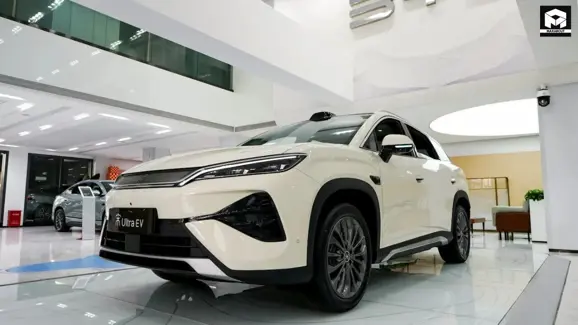
At ₹21 lakh (expected), the BYD Song Ultra positions itself strategically between mass-market EVs and premium European offerings. I think this pricing sweet spot makes sense, especially considering the advanced battery technology and premium features included.
The ownership mathematics looks compelling. While the initial cost is higher than comparable petrol SUVs, I estimate monthly running costs at about ₹1,200-1,500 for typical urban usage - nearly 70% lower than fossil-fuel alternatives. BYD's announced expansion to 53 service centers across India by late 2024 should address maintenance concerns.
The vehicle's residual value remains a talking point. Based on current market trends, electric SUVs typically retain 55-60% of their value after three years. The Song Ultra's advanced battery technology, with its impressive lifespan claims, should support strong resale figures.
What particularly impresses me is the warranty package: 8 years/150,000 km for the battery and 6 years/150,000 km for the vehicle. This comprehensive coverage, combined with lower maintenance requirements, presents a compelling total cost of ownership argument for urban professionals and tech-savvy families looking to transition to electric mobility.
Expected Launch and Indian Market Impact
From what I understand, BYD is likely to introduce the Song Ultra EV in India by late 2024 or early 2025. The timing seems strategic, as the premium EV segment is rapidly evolving and Indian consumers are becoming more receptive to electric vehicles in the ₹20-25 lakh range.
I expect BYD will make several India-specific modifications, particularly to the suspension setup to handle our road conditions. The ground clearance might see a slight increase, and the thermal management system could be optimized for our climate. These adaptations would be crucial for success in the Indian market.
The impact on the premium EV segment could be significant. With its impressive charging capabilities and range, the Song Ultra could challenge established players. However, BYD faces two main hurdles:
Building consumer trust in a relatively new brand for Indian buyers
Expanding their service network beyond major metropolitan areas
If BYD gets the pricing right - ideally around ₹21-23 lakh for the base variant - and maintains consistent quality, I believe the Song Ultra could become a strong contender in India's growing electric SUV market.
No comments yet
Be the first to share your thoughts!
Want to read more automotive news?
Stay updated with the latest car launches, reviews, and industry insights.
Browse All News