
BMW India Sees Little Scope for Plug-In Hybrids as EV Share Hits 26%
BMW India sees limited room for plug-in hybrid vehicles in its current strategy, according to comments attributed to chief executive Hardeep Singh Brar. The company reportedly says battery-electric vehicles accounted for 26% of its first-half sales.The position reflects BMW's experience at the premi...
Editorial Team
BMW India sees limited room for plug-in hybrid vehicles in its current strategy, according to comments attributed to chief executive Hardeep Singh Brar. The company reportedly says battery-electric vehicles accounted for 26% of its first-half sales.
The position reflects BMW's experience at the premium end of the Indian market. It should not be read as a forecast for every manufacturer or price segment, where charging access, vehicle cost and usage patterns can differ substantially.
Why BMW questions the PHEV case
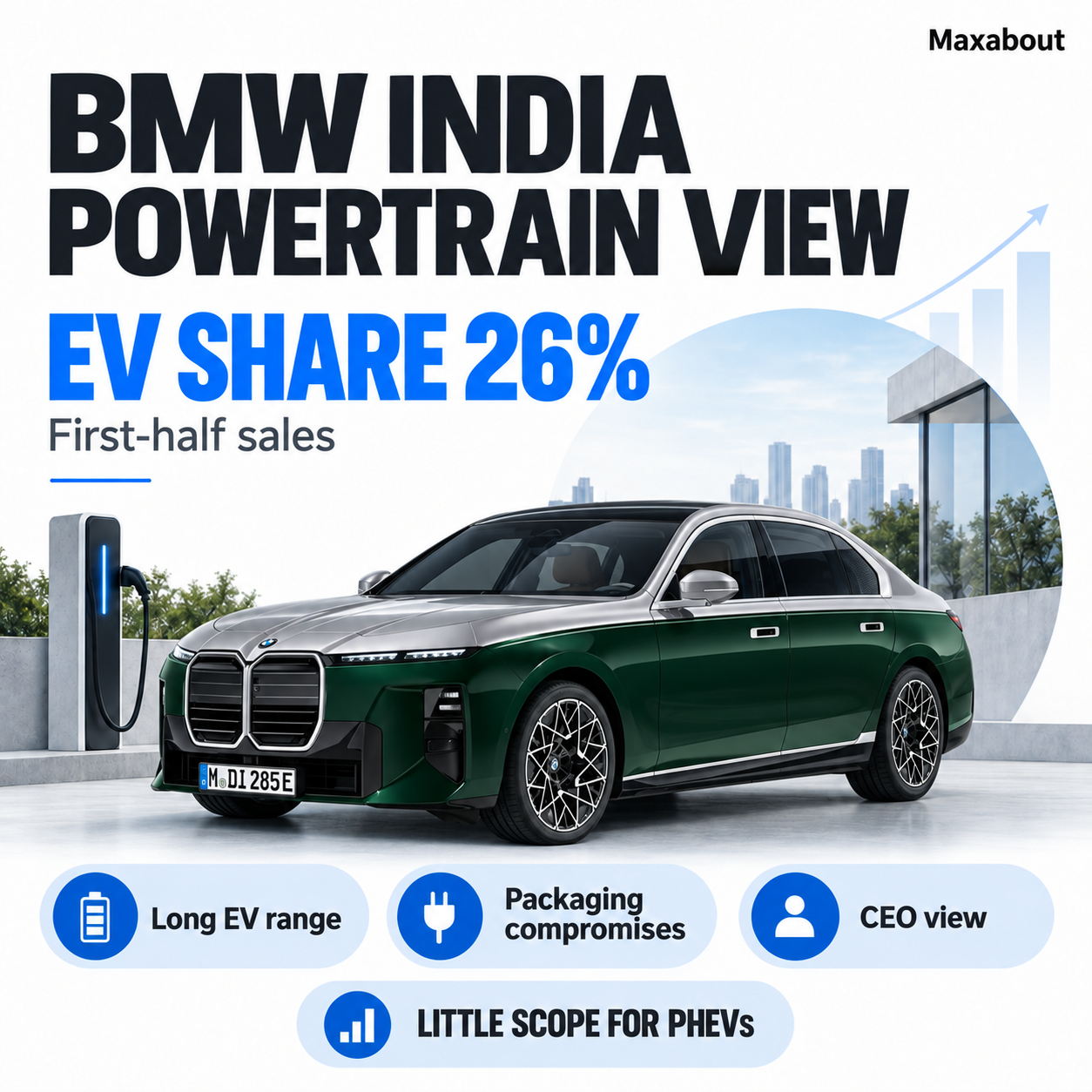
The argument has two parts. First, modern electric vehicles offer longer real-world range than earlier models, reducing the need for an internal-combustion backup on many journeys. Second, a plug-in hybrid must package a combustion engine, fuel system, battery and electric drive hardware in one vehicle.
That combination can add weight, complexity and space compromises. A PHEV can still suit owners who charge regularly but need combustion backup, yet its efficiency advantage depends heavily on how consistently the battery is used.
What the 26% figure means
A reported 26% EV share in first-half BMW India sales is meaningful for a luxury brand because premium buyers often have greater access to home or workplace charging. It also shows that a focused electric portfolio can represent a material part of sales without a transitional plug-in-hybrid layer.
The percentage is a share of BMW India's reported first-half sales, not the overall Indian passenger-vehicle market. Absolute volumes and model mix matter when comparing it with mass-market brands.
Buyer implications
BMW buyers should expect battery-electric models to remain central to the brand's India strategy.
Diesel and petrol options may continue where they fit demand and regulation.
A PHEV should be assessed on charging discipline, boot space, weight and total ownership cost.
The 26% share does not imply identical EV adoption across all Indian price bands.
Industry context
India's wider market is still pursuing multiple pathways including petrol, diesel, CNG, hybrids and EVs. BMW's conclusion is therefore a company-specific strategic view informed by its customer base and products, rather than a universal verdict on hybrid technology.
The statements and sales share come from a single attributed interview report. No separate BMW India release for these specific claims was retained, so they remain clearly attributed.
Bottom line
BMW India's reported EV momentum gives it less reason to use plug-in hybrids as a bridge. The strategy highlights how rapidly powertrain choices can diverge between premium and mass-market segments.
Explore the story
Related news
Share your view and join the discussion.
Earn reward points for every comment and get a chance to win ₹1,000 in our weekly lucky draw. Sign in with Google in one tap.
Start the conversation
No one has commented on this article yet. Be the first to share your view.
Want to read more automotive news?
Stay updated with the latest car launches, reviews, and industry insights.
Browse All News