
2 min read
296 views
Meet Custom Built Yamaha R15 VENOM by TwentyTwo Customs
Ever imagined what Yamaha R15 would look like if it suddenly plans to lose some weight? The closest possible answer is R15 VENOM, a custom built street bike that is now more biased toward the concept design language with minimum parts and track-only status. The loss of stock headlight and performanc...
Ever imagined what Yamaha R15 would look like if it suddenly plans to lose some weight? The closest possible answer is R15 VENOM, a custom built street bike that is now more biased toward the concept design language with minimum parts and track-only status. The loss of stock headlight and performance enhancing exhaust results in the R15 VENOM being not suitable for road use. Apart from the frame, seats and fuel tank on the same, VENOM loses every other plastic part that earlier fitted around the body for effective aerodynamic performance. Currently, it feels more like a drag race machine.
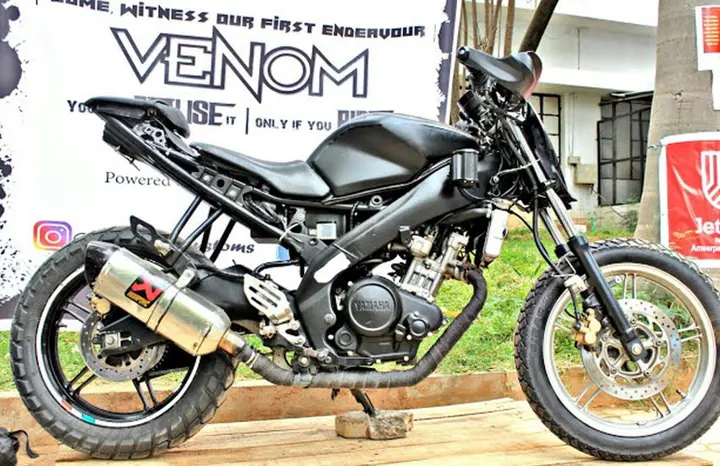 Even the front and rear fenders were removed to make R15 VENOM as light as possible. The stock alloy wheels are seen with a different paint scheme for the front and rear end. The exhaust pipe is completely insulated with a heat resisting tape while knuckle guards were added to complement the flat front fascia with a white stripe running through it. The frame now handles a fog light fitted to the right side while the radiator is totally exposed and seen without any protector or cover. R15 VENOM is based on the second generation variant, known precisely for its higher than usual rear seat height.
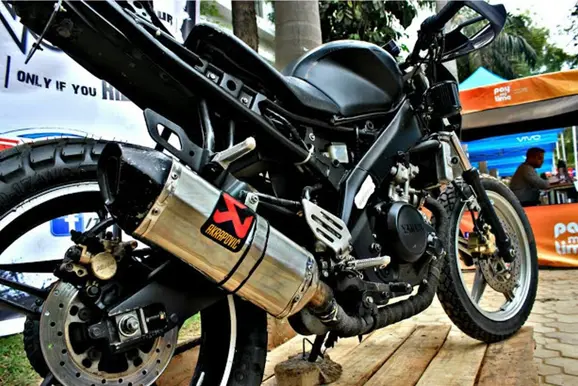 R15 VENOM is fitted with thick tread tyres and offer stock disc brakes at both ends. The V3 comes with bigger 282mm front brake while the one seen here on the motorcycle measures 267mm. A stock Yamaha R15 V2 comes with 149cc, single cylinder engine, producing 17 PS of maximum power and 15 Nm of torque. The value remains similar for the torque in both V3 and V2 models but power increase is clearly visible for the R15 V3 (19.3 PS). The price difference between both the models (when V2 was available) is again justified by adding equipment like LED lights and slipper clutch.
For further inquiries and pricing details, you can contact:
R15 VENOM is fitted with thick tread tyres and offer stock disc brakes at both ends. The V3 comes with bigger 282mm front brake while the one seen here on the motorcycle measures 267mm. A stock Yamaha R15 V2 comes with 149cc, single cylinder engine, producing 17 PS of maximum power and 15 Nm of torque. The value remains similar for the torque in both V3 and V2 models but power increase is clearly visible for the R15 V3 (19.3 PS). The price difference between both the models (when V2 was available) is again justified by adding equipment like LED lights and slipper clutch.
For further inquiries and pricing details, you can contact:
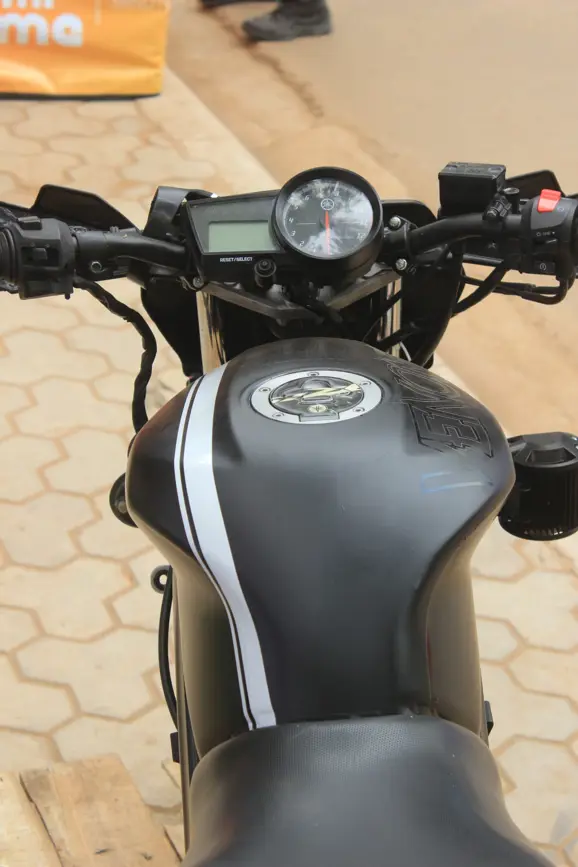
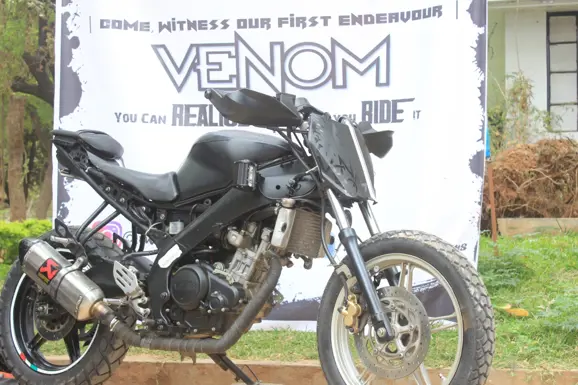
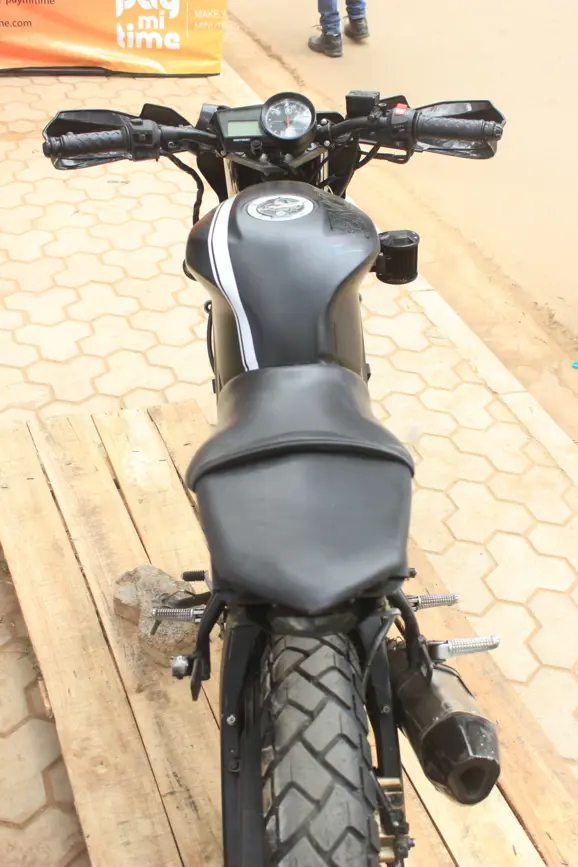
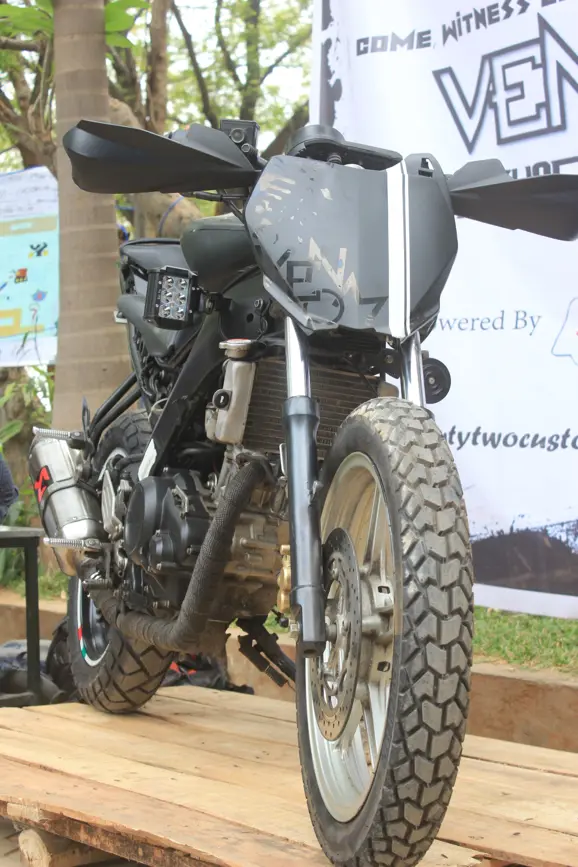
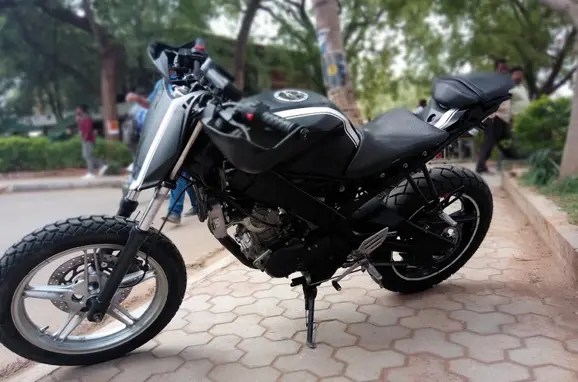
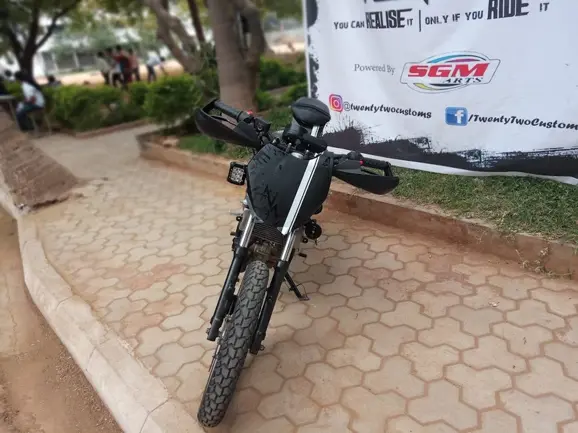
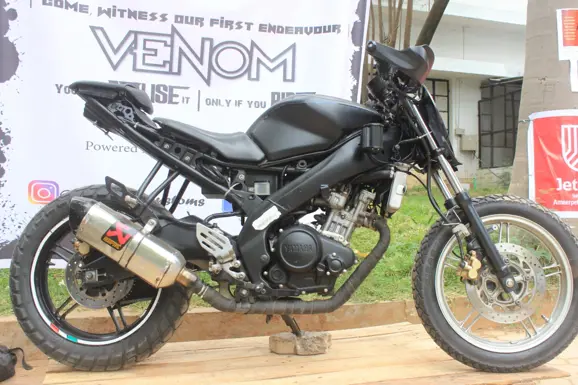
Even the front and rear fenders were removed to make R15 VENOM as light as possible. The stock alloy wheels are seen with a different paint scheme for the front and rear end. The exhaust pipe is completely insulated with a heat resisting tape while knuckle guards were added to complement the flat front fascia with a white stripe running through it. The frame now handles a fog light fitted to the right side while the radiator is totally exposed and seen without any protector or cover. R15 VENOM is based on the second generation variant, known precisely for its higher than usual rear seat height.
R15 VENOM is fitted with thick tread tyres and offer stock disc brakes at both ends. The V3 comes with bigger 282mm front brake while the one seen here on the motorcycle measures 267mm. A stock Yamaha R15 V2 comes with 149cc, single cylinder engine, producing 17 PS of maximum power and 15 Nm of torque. The value remains similar for the torque in both V3 and V2 models but power increase is clearly visible for the R15 V3 (19.3 PS). The price difference between both the models (when V2 was available) is again justified by adding equipment like LED lights and slipper clutch.
For further inquiries and pricing details, you can contact:
TwentyTwo Customs
- Phone Number: 090321 51415
- Email: abidsalman22@gmail.com
- Facebook Page
Yamaha R15 VENOM Photos
Ad
I
Immanuel Raja is an Automotive Writer with 8 years of experience covering the Indian automotive landscape. He specializes in Electric Vehicles and Hybrid Technology, with particular expertise in battery systems, charging infrastructure, and the integration of alternative powertrains in Indian road conditions. Raja has extensively tested over 200 vehicles across various segments, from entry-level EVs to premium hybrids, developing nuanced insights into their performance on India's diverse and challenging roads. His analysis encompasses both technical specifications and practical ownership considerations that matter to Indian consumers, including charging accessibility, maintenance costs, and performance in extreme weather conditions. With a finger on the pulse of India's evolving automotive preferences, Raja delivers clear, factual assessments that help readers navigate the transition to electrified mobility in the context of India's unique market dynamics.
About the Author
Explore the story
Related news
Comments
Share your view and join the discussion.
Start with:
Earn reward points for every comment and get a chance to win ₹1,000 in our weekly lucky draw. Sign in with Google in one tap.
Start the conversation
No one has commented on this article yet. Be the first to share your view.
Want to read more automotive news?
Stay updated with the latest car launches, reviews, and industry insights.
Browse All News