
2 min read
217 views
No Ban on 2-Stroke Vehicles from 1st April 2019 (Detailed Report)
The reports of a complete ban on 2-stroke vehicles like motorcycles, scooters, and three-wheelers have started appearing on the internet. An image has started circulating on WhatsApp stating that the 2-stroke vehicles will be banned in India from 1st April 2019. But the source of the image is unknow...
The reports of a complete ban on 2-stroke vehicles like motorcycles, scooters, and three-wheelers have started appearing on the internet. An image has started circulating on WhatsApp stating that the 2-stroke vehicles will be banned in India from 1st April 2019. But the source of the image is unknown and nothing has been announced officially regarding the same by the transport department.
No press release regarding the move has been published by any source. We can safely say that the image is fake and the 2-stroke vehicles are not going to be banned in India. The decision to let a machine run or ban the same from the roads is taken by the central government and no such notification was released by them officially. However, even if the ban comes into action, there is no such way by which the authorities can end the road-legal status of a vehicle for which the tax has been paid.
[caption id="attachment_369592" align="aligncenter" width="554"]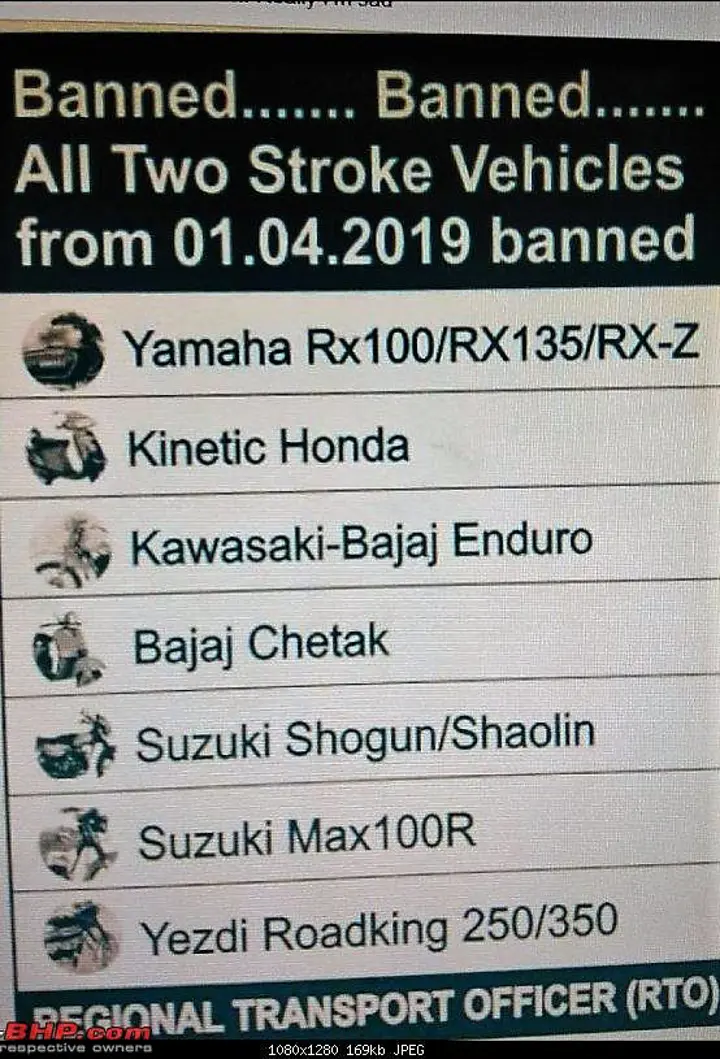 The Image Being Circulated on WhatsApp[/caption]
The highest level of possibility is that the registration authorities can stop extending the period for these machines and help collectors of these machines with a different registration way to keep their bikes and cars legal. They can be given permission to use these on special occasions.
Still, the last two-stroke machine would have been sold around the first half of the year 2000 and the owner would have definitely gone for extension of the registration after 15 years. The reason mentioned everywhere for the ban is the level of pollution through these machines.
[caption id="attachment_232288" align="aligncenter" width="850"]
The Image Being Circulated on WhatsApp[/caption]
The highest level of possibility is that the registration authorities can stop extending the period for these machines and help collectors of these machines with a different registration way to keep their bikes and cars legal. They can be given permission to use these on special occasions.
Still, the last two-stroke machine would have been sold around the first half of the year 2000 and the owner would have definitely gone for extension of the registration after 15 years. The reason mentioned everywhere for the ban is the level of pollution through these machines.
[caption id="attachment_232288" align="aligncenter" width="850"]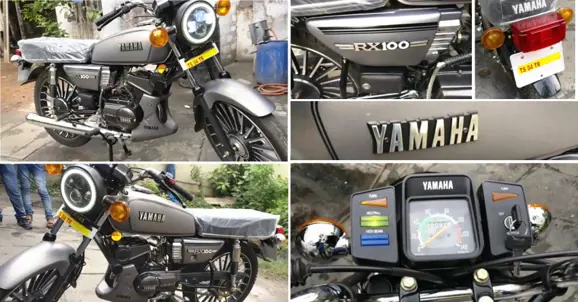 Yamaha RX100 Gunmetal Grey Edition[/caption]
It is highly unlikely for the government to take any such step without letting the owners know in advance. The two-stroke vehicles include a large number of auto-rickshaws, vintage motorcycles and scooters like Bajaj Chetak.
The first group of owners uses the same for work and it could be hard for them to switch at a sudden notice. Also, the history of Indian elections proves that existing governments never take bad decisions when the polls are approaching fast. The government won’t let the people down by taking their prized possessions away anytime soon.
Image Source
Yamaha RX100 Gunmetal Grey Edition[/caption]
It is highly unlikely for the government to take any such step without letting the owners know in advance. The two-stroke vehicles include a large number of auto-rickshaws, vintage motorcycles and scooters like Bajaj Chetak.
The first group of owners uses the same for work and it could be hard for them to switch at a sudden notice. Also, the history of Indian elections proves that existing governments never take bad decisions when the polls are approaching fast. The government won’t let the people down by taking their prized possessions away anytime soon.
Image Source
The Image Being Circulated on WhatsApp[/caption]
The highest level of possibility is that the registration authorities can stop extending the period for these machines and help collectors of these machines with a different registration way to keep their bikes and cars legal. They can be given permission to use these on special occasions.
Still, the last two-stroke machine would have been sold around the first half of the year 2000 and the owner would have definitely gone for extension of the registration after 15 years. The reason mentioned everywhere for the ban is the level of pollution through these machines.
[caption id="attachment_232288" align="aligncenter" width="850"] Yamaha RX100 Gunmetal Grey Edition[/caption]
It is highly unlikely for the government to take any such step without letting the owners know in advance. The two-stroke vehicles include a large number of auto-rickshaws, vintage motorcycles and scooters like Bajaj Chetak.
The first group of owners uses the same for work and it could be hard for them to switch at a sudden notice. Also, the history of Indian elections proves that existing governments never take bad decisions when the polls are approaching fast. The government won’t let the people down by taking their prized possessions away anytime soon.
Image SourceAd
I
Immanuel Raja is an Automotive Writer with 8 years of experience covering the Indian automotive landscape. He specializes in Electric Vehicles and Hybrid Technology, with particular expertise in battery systems, charging infrastructure, and the integration of alternative powertrains in Indian road conditions. Raja has extensively tested over 200 vehicles across various segments, from entry-level EVs to premium hybrids, developing nuanced insights into their performance on India's diverse and challenging roads. His analysis encompasses both technical specifications and practical ownership considerations that matter to Indian consumers, including charging accessibility, maintenance costs, and performance in extreme weather conditions. With a finger on the pulse of India's evolving automotive preferences, Raja delivers clear, factual assessments that help readers navigate the transition to electrified mobility in the context of India's unique market dynamics.
About the Author
Explore the story
Related news
Comments
Share your view and join the discussion.
Start with:
Earn reward points for every comment and get a chance to win ₹1,000 in our weekly lucky draw. Sign in with Google in one tap.
Start the conversation
No one has commented on this article yet. Be the first to share your view.
Want to read more automotive news?
Stay updated with the latest car launches, reviews, and industry insights.
Browse All News