
43% consider electric two-wheelers in BCG survey; sales share is 9.9%
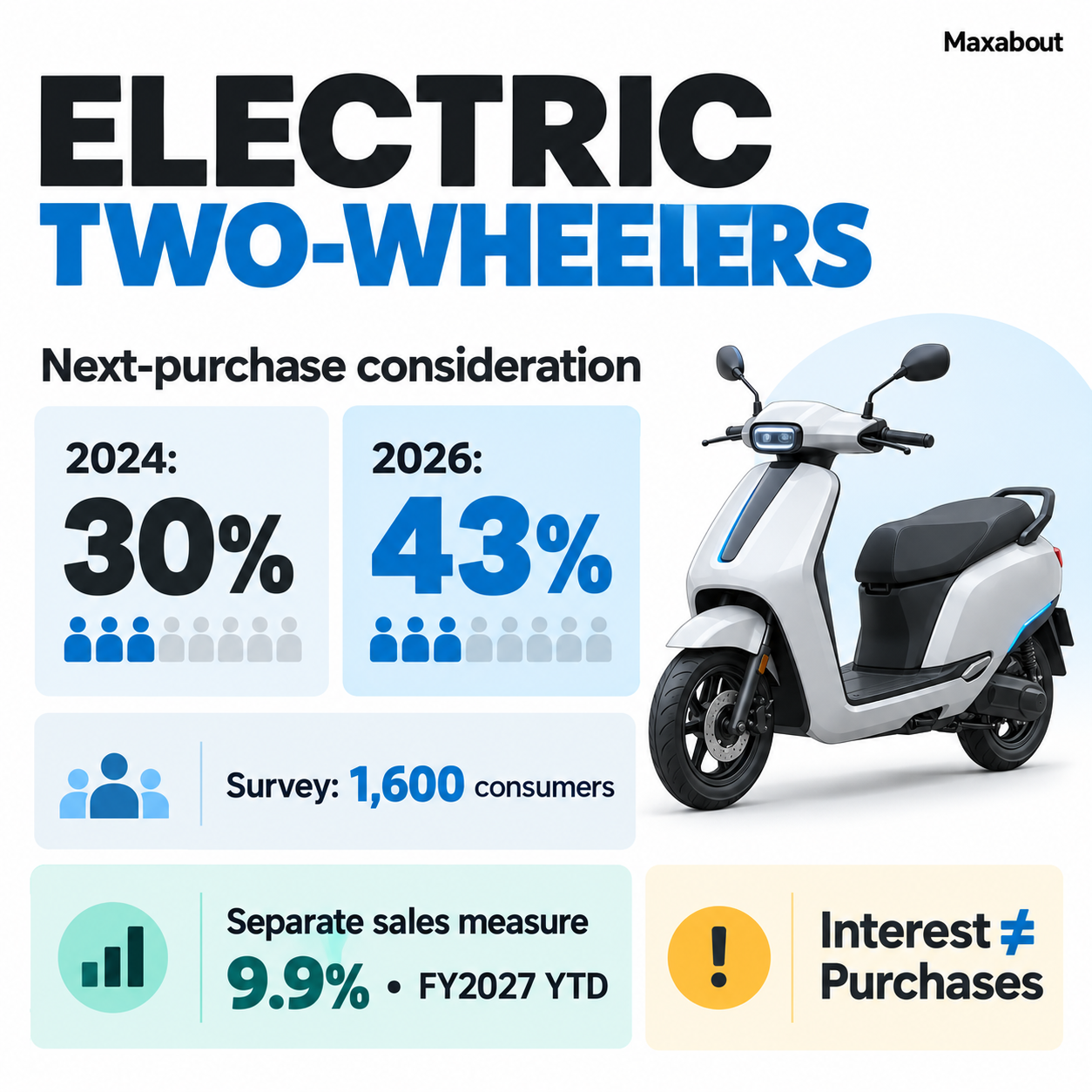
43% of consumers surveyed by BCG are actively considering an electric two-wheeler for their next purchase, compared with 30% in 2024. The finding comes from its 2026 research involving 1,600 current and potential two-wheeler consumers. It describes purchase consideration, rather than a forecast that...
43% of consumers surveyed by BCG are actively considering an electric two-wheeler for their next purchase, compared with 30% in 2024. The finding comes from its 2026 research involving 1,600 current and potential two-wheeler consumers. It describes purchase consideration, rather than a forecast that 43% of sales will be electric.
The headline findings, kept in their proper categories
Survey interest: next-purchase consideration rose from 30% in 2024 to 43% in the latest study.
Research base: 1,600 current and potential two-wheeler consumers, alongside ethnographic research.
Sales penetration: the report separately puts electric two-wheelers at 9.9% in FY2027 year to date, versus 5.5% in FY2024.
Reader takeaway: interest and actual adoption are moving upward, but the percentages measure different things.
What does the rise from 30% to 43% mean?
The change is 13 percentage points. Calling it a 13% increase would confuse a difference in percentage points with relative growth. The more useful interpretation is that electric models are entering the next-purchase shortlist for a larger share of the surveyed group.
Being considered is an earlier stage than being bought. A respondent may compare several powertrains, postpone a purchase or ultimately choose another vehicle. The survey does not turn those possible decisions into completed transactions. It also does not provide a probability that each interested person will buy an EV.
For manufacturers, a larger consideration pool makes product fit and ownership confidence important. For buyers, the result is market context rather than a reason to choose a model that fails their own requirements.
Why the 9.9% sales figure is a separate measure
| Measure | Earlier figure | Latest figure | What it describes |
|---|---|---|---|
| Next-purchase consideration | 30% in 2024 | 43% in the 2026 study | Stated interest among surveyed consumers |
| Electric two-wheeler sales penetration | 5.5% in FY2024 | 9.9% in FY2027 year to date | Electric share of two-wheeler sales in the stated periods |
The rows should not be placed on one scale and interpreted as a purchase-conversion funnel. They use different populations and time frames. Subtracting 9.9 from 43 would not reveal how many interested consumers failed to buy an EV, because the report summary does not track the same group from intention to transaction.
The latest sales number is also a year-to-date figure. It is not the final share for the completed financial year, and the checked summary does not specify its exact cutoff date. A comparison with the full FY2024 baseline therefore needs those period labels to remain visible.
What the research establishes—and what it leaves open
BCG describes longitudinal proprietary work combining qualitative insights with a quantitative survey. Its summary says mobility context, including travel purpose and distance, is an important way to understand consumers beyond conventional demographic groups.
The public summary supplies the sample size but not enough detail to independently assess every sampling, weighting or fieldwork choice. Those omissions do not negate the reported finding; they limit how confidently it can be generalised beyond the surveyed group. It would be premature to attach a margin of error or a precise national purchase forecast without the necessary methodology.
How to use the finding as a buyer
Translate the broad trend into practical questions: can the vehicle cover a normal day with a sensible reserve, is charging convenient, and is service accessible where it will be used? Compare written warranty conditions, the total purchase package and the available support for the exact model.
BCG says owners' experiences are often more positive than wider expectations in several areas. That is an aggregate observation, not a guarantee about every vehicle or owner. A suitable test ride and checks against an individual use case remain more useful than treating the headline percentage as an endorsement.
FAQs
Does 43% mean electric two-wheelers have 43% market share?
No. It is a survey consideration figure. The separate sales penetration figure is 9.9% for FY2027 year to date.
How many consumers were surveyed?
The stated quantitative sample is 1,600 current and potential two-wheeler consumers.
Is this a forecast of future purchases?
No. Stated next-purchase consideration does not establish how many respondents will ultimately buy an electric model.
Explore the story
Related news


Share your view and join the discussion.
Earn reward points for every comment and get a chance to win ₹1,000 in our weekly lucky draw. Sign in with Google in one tap.
Start the conversation
No one has commented on this article yet. Be the first to share your view.
Want to read more automotive news?
Stay updated with the latest car launches, reviews, and industry insights.
Browse All News