
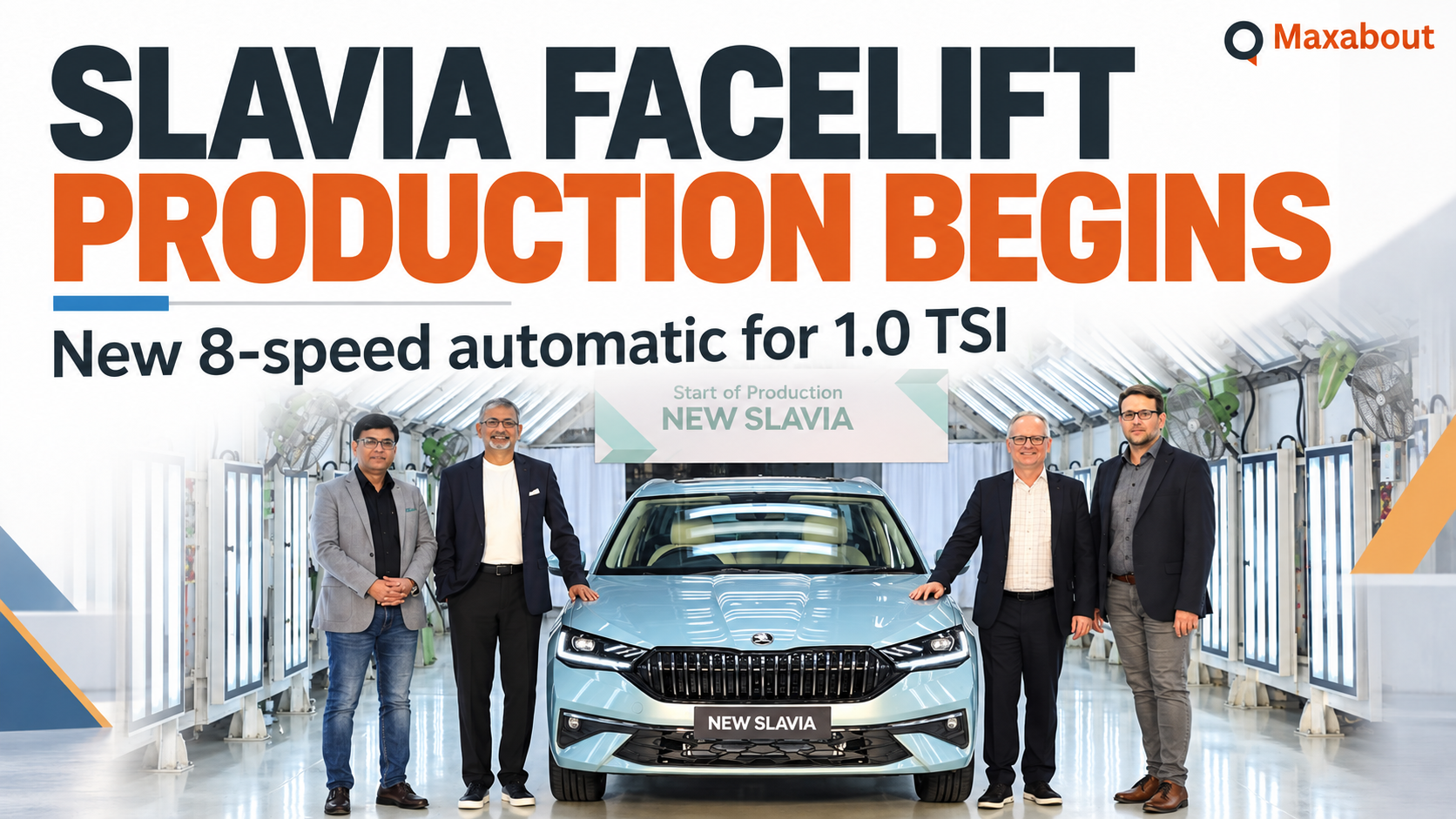
2026 VW Taigun Facelift Launched at ₹11 Lakh: Gets 40+ New Features and a Smooth 8-Speed Auto
The Taigun has always had something the competition struggles to match — a genuinely satisfying driving experience. While rivals chased feature lists and bold styling, Volkswagen quietly built a mid-size SUV that actually felt planted on broken tarmac, responded properly to steering inputs, and didn...
Editorial Team
The Taigun has always had something the competition struggles to match — a genuinely satisfying driving experience. While rivals chased feature lists and bold styling, Volkswagen quietly built a mid-size SUV that actually felt planted on broken tarmac, responded properly to steering inputs, and didn't feel like it was falling apart after a year of Indian roads. Enthusiasts noticed. Mainstream buyers, though, often walked away to the Hyundai Creta or Kia Seltos, lured by longer feature sheets and more familiar brand comfort.
That's the honest tension Volkswagen has lived with in India. They've been cautious — sometimes frustratingly so — about updates. Minor revisions, incremental changes, nothing dramatic. So when the 2026 Taigun facelift arrived at a starting price of ₹11 lakh with over 40 new features and a fresh 8-speed automatic gearbox, it felt different. Worth paying attention to.
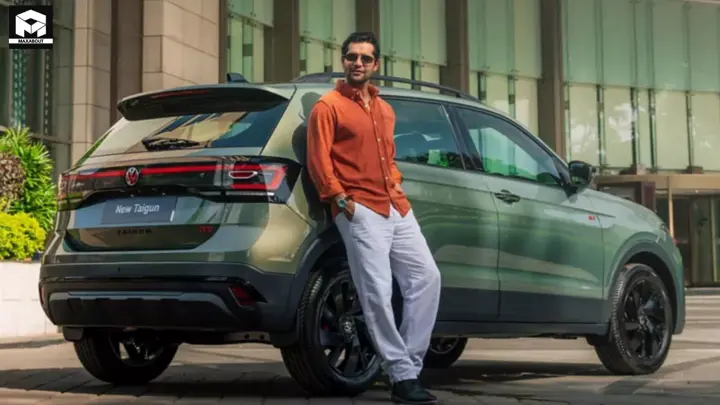
Is this a genuine leap forward, or mostly surface-level changes dressed up as something bigger? That's exactly what I want to work through here. We'll look at what's actually new, whether the Skoda Kushaq sibling rivalry matters, and whether ₹11 lakh still makes sense in a segment that keeps raising the bar every single year.
What Has Actually Changed: Design Updates Inside and Out
Starting from the front, the 2026 Taigun facelift gets a noticeably sharper face. The revised front bumper looks more sculpted, and Volkswagen has updated the LED DRL signature to a connected horizontal light strip that runs across the front. It gives the car a wider, more planted stance — at least visually. The headlamp clusters themselves look cleaner, less busy than before.
Around the back, the tail lamp design has been refreshed with a similar connected-light treatment. It's a subtle update, but it does make the rear look more cohesive and contemporary. These lighting changes feel genuinely meaningful, not just cosmetic box-ticking.
New alloy wheel designs are available depending on the variant, and Volkswagen has introduced a couple of fresh colour options. Nothing dramatically bold, but the palette feels more current.
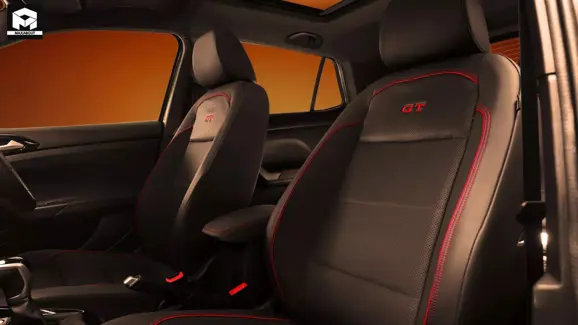
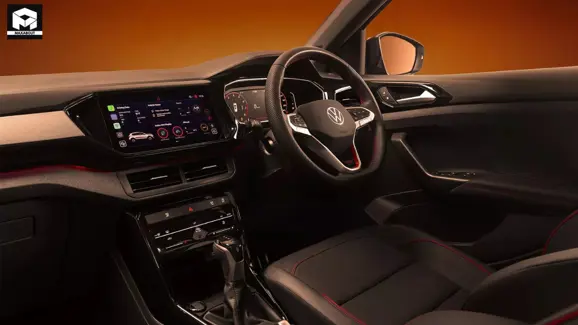
Step inside, and the changes are more noticeable. The dashboard gets updated trim elements, revised upholstery patterns, and a larger touchscreen layout that feels better integrated than before. Build quality, by most accounts, remains a strong point — panel gaps are tight, materials feel solid. In terms of interior feel, it still edges past most rivals in this segment on perceived quality. Some elements, like the steering wheel design, are minor refreshes rather than full redesigns. Meaningful where it counts, incremental elsewhere.
The 40+ New Features: What Stands Out and What Is Just Filler
Forty-plus features is a big number to throw around. But if you look closely, not everything on that list deserves equal celebration. Some additions are genuinely useful. Others feel like spec-sheet padding designed to win comparison charts rather than improve daily driving.
Start with what actually matters. The ventilated front seats are a real upgrade — anyone who has sat in a parked car in Mumbai or Delhi in May will understand immediately. Similarly, the wireless charging pad is now properly quick rather than the sluggish afterthought it was before. The rear parking camera resolution has improved noticeably, which matters on tight streets in cities like Pune or Bengaluru where every inch counts.
The ADAS suite, if equipped on your trim, includes lane assist and autonomous emergency braking. In theory, useful. In Indian traffic conditions, however, these systems can feel overly sensitive — the lane assist especially tends to intervene on roads without clear markings, which is most roads outside highways.
Then there are the features that sound impressive but rarely get used — the air purifier function, for instance, is genuinely relevant in Delhi but is essentially a bonus elsewhere. Connected car tech adds remote monitoring and geofencing, which most buyers enable once and forget.
Overall, roughly half these features justify the price bump. The other half? Decent to have, but not reasons to upgrade on their own.
The New 8-Speed Automatic Gearbox: How Big a Deal Is This Really?
Honestly, for most buyers, this is the most meaningful change in the entire facelift. More meaningful than the 40+ features combined.
Here's the background. The older Taigun's DSG — a dual-clutch transmission — is genuinely clever engineering. It shifts fast, feels sporty, and enthusiasts love it. But dual-clutch units have a known weakness: low-speed, stop-and-go conditions. The clutch engagement at crawling speeds can feel hesitant, sometimes jerky. Anyone who drove the older Taigun regularly through Bengaluru's Outer Ring Road or Delhi's Lajpat Nagar intersection during peak hours likely felt that occasional lurch. It's not catastrophic, but it's noticeable enough that Indian owners have complained about it for years.
The new 8-speed torque-converter automatic works very differently. Instead of mechanical clutch plates, it uses fluid coupling — which means power delivery at low speeds is inherently smoother and more forgiving. In bumper-to-bumper traffic, it simply feels more relaxed and natural.
Importantly, this gearbox comes paired with the 1.5L TSI engine. The 1.0L TSI retains a 6-speed torque-converter unit. So if the transmission upgrade matters to you — and for city driving, it genuinely should — the 1.5L variant is the one to consider.
What do enthusiasts lose? Some sharpness in sporty driving. The DSG's quick shifts felt exciting. The torque-converter is smoother but slightly less aggressive. A fair trade-off for most people, honestly.
Pricing and Variants: Is ₹11 Lakh a Genuine Entry Point or Just a Number?
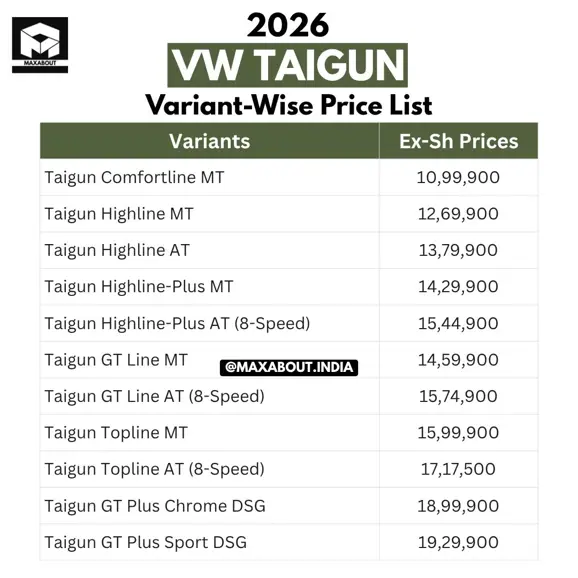
Let's be honest about this. ₹11 lakh is the number Volkswagen wants you to remember. It's the headline, the conversation starter. But for most buyers walking into a showroom, that base variant is rarely what ends up in the driveway.
The entry-level trim at ₹11 lakh gets you into the Taigun family — but just barely. Expect the essentials: a decent build, the 1.0L TSI engine, and VW's solid road manners. What you likely won't get at this price is the wireless charging, the larger touchscreen, connected car features, or any of those 40+ new additions that made headlines. The base variant exists to anchor the price perception.
The real sweet spot — the variant where the Taigun facelift actually makes sense as a purchase — is almost certainly somewhere between ₹14 lakh and ₹16 lakh. That's where meaningful features start appearing. The top-end 1.5L TSI with the new 8-speed automatic likely pushes close to ₹18-19 lakh, depending on the city and applicable taxes.
 Against rivals like the Hyundai Creta and Kia Seltos, the Taigun competes reasonably well on build quality and driving dynamics. But feature-for-feature at similar price points, Korean alternatives often offer more on paper. VW charges a premium for refinement and badge value — that's simply the reality.
If your budget is genuinely ₹11 lakh, there are stronger choices available. The Taigun rewards buyers willing to stretch further.
Real-World Ownership Perspective: Fuel Efficiency, Maintenance, and Service Network
Long-term ownership is where the Taigun's story gets genuinely complicated. The driving experience is excellent — but running costs deserve honest scrutiny before you sign anything.
Fuel efficiency first. The 1.0 TSI typically returns around 14–16 km/l on highways and closer to 10–12 km/l in dense city traffic like Bengaluru or Delhi. The 1.5 TSI, being the more powerful option, expectedly drops slightly — roughly 12–14 km/l on open roads. These are realistic figures based on widely reported owner experiences, not optimistic ARAI claims. The new 8-speed automatic is smoother than the older DSG, which should help efficiency in stop-and-go conditions.
Service costs remain a genuine concern. Volkswagen has historically carried a reputation for expensive maintenance compared to Maruti or Hyundai ownership. Periodic service bills can run noticeably higher, and proprietary parts pricing adds up over time. That said, VW India has made visible efforts to expand its service network — currently around 300+ touchpoints across the country. Tier-2 cities like Coimbatore, Lucknow, and Nagpur have better coverage now than five years ago, though rural reach still lags behind mainstream brands.
The standard warranty stands at 4 years or 1,00,000 km, which is competitive. Extended warranty packages are available, and from what existing owners widely report, purchasing one is strongly advisable given the cost of component repairs outside warranty coverage.
In short — the Taigun rewards disciplined ownership. Budget for servicing realistically, stay within the service network's reach, and it holds up well.
Should You Buy the 2026 Taigun Facelift? Who Is It Really For?
The honest answer is — this car is not for everyone, and that's perfectly fine. The 2026 Taigun facelift is built for a specific kind of buyer, and if you match that profile, it's a genuinely compelling choice at ₹11 lakh.
You're the right buyer if driving feel actually matters to you. The Taigun's MQB-A0-IN platform delivers a composed, planted experience that neither the Hyundai Creta nor the Kia Seltos quite replicates. The Creta offers more feature abundance and a vastly larger service network. The Seltos brings strong value and refinement. But neither feels quite as satisfying on a twisty stretch of road or at highway speeds. If you've driven all three back-to-back, you'll feel the difference.
The 8-speed automatic, in particular, is a meaningful upgrade — smooth, quick, and well-suited to both Bengaluru stop-and-go traffic and open expressway runs.
Who should probably look elsewhere? If you live in a smaller town without a nearby VW dealership, ownership friction is a real concern. If a diesel engine is non-negotiable for high-mileage use, the Taigun simply doesn't offer one.
But at ₹11 lakh, Volkswagen has opened the door meaningfully. This isn't a compromise entry point — it's a genuinely good product at a more accessible price. The facelift makes the Taigun a stronger contender than it's ever been.
Explore the story
Related news
Share your view and join the discussion.
Earn reward points for every comment and get a chance to win ₹1,000 in our weekly lucky draw. Sign in with Google in one tap.
Start the conversation
No one has commented on this article yet. Be the first to share your view.
Want to read more automotive news?
Stay updated with the latest car launches, reviews, and industry insights.
Browse All News