
2026 Toyota Yaris Cross: New Design & GR Sport Variant
Every time Toyota pulls the wraps off something new at a global stage, I find myself paying closer attention than usual. Not because of the fanfare, but because Toyota has a track record of eventually bringing these products to markets like India — sometimes sooner than expected.The 2026 Toyota Yari...
Editorial Team
Every time Toyota pulls the wraps off something new at a global stage, I find myself paying closer attention than usual. Not because of the fanfare, but because Toyota has a track record of eventually bringing these products to markets like India — sometimes sooner than expected.
The 2026 Toyota Yaris Cross is the latest example. Unveiled recently with a noticeably refreshed exterior design and, perhaps more interestingly, a brand-new GR Sport variant, this compact crossover is generating genuine curiosity. And for good reason.
Consider the landscape here. India's mid-size SUV and crossover segment is arguably the most contested space in our market right now. From what I've observed across industry reports and enthusiast discussions, buyers in cities like Pune, Bengaluru, and Hyderabad are actively seeking vehicles that balance style, efficiency, and everyday practicality — without stretching the budget uncomfortably.
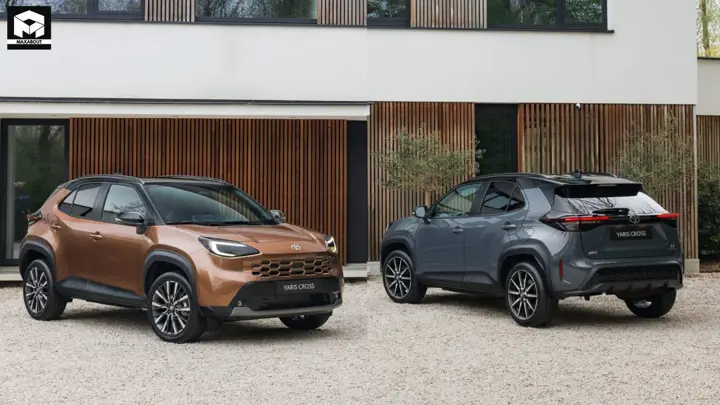 Toyota already has a solid presence here with the Urban Cruiser Hyryder. A product like the Yaris Cross, slotting potentially below or alongside it, could fill a real gap. The GR Sport badge adds a layer of visual appeal that younger buyers are increasingly drawn to.
This debut is worth watching closely.
What's New in the 2026 Design: A Sharper, More Confident Stance
The 2026 Yaris Cross looks like Toyota finally decided to stop playing it safe. The outgoing model was pleasant enough — inoffensive, clean, forgettable in a crowd. This updated version has noticeably more edge to it.
Up front, the revised fascia gets a wider, more angular grille treatment that sits lower and feels more planted. The headlight clusters are slimmer and sharper, with a swept graphic that connects visually across the front end. It reads more premium than before — less economy SUV, more considered design.
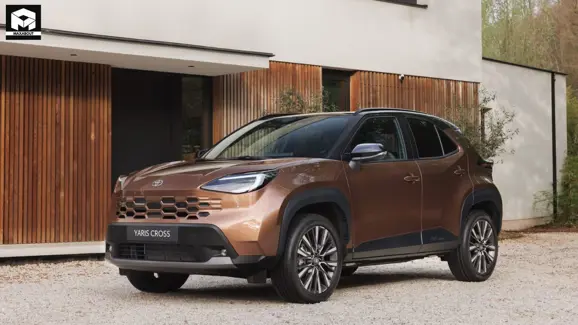 The body lines have been tightened too. There is a stronger shoulder crease running along the side, giving the Yaris Cross a more upright, defined silhouette. Proportionally, it looks more confident without actually being larger. That is a difficult thing to get right, and Toyota seems to have managed it.
All of this falls in line with Toyota's broader TNGA design philosophy — low centre of gravity, wide stance, structured surfaces. The Yaris Cross is clearly leaning into that language more aggressively now.
Is it a dramatic transformation? Honestly, no. But it is a meaningful evolution rather than a sticker-change refresh. In markets like India where design increasingly drives showroom decisions, this sharper look could genuinely move the needle.
The GR Sport Variant: Performance Aesthetics or Something More?
Let's be clear about something upfront. When Toyota badges a vehicle with GR Sport, it does not mean you are getting a Gazoo Racing track machine. That distinction matters. GR Sport sits in Toyota's ecosystem as a sportier appearance package with measured mechanical adjustments — think of it as the visual and tactile middle ground between a standard trim and a genuine performance product like the GR Yaris or GR86.
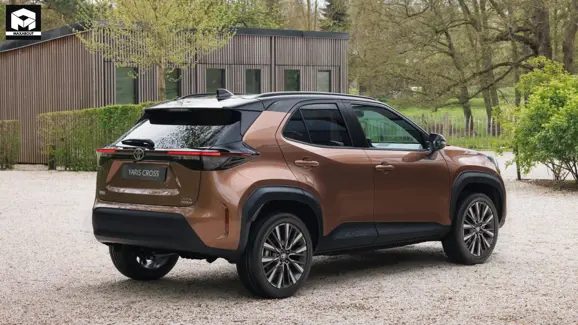 Visually, the differences are immediately noticeable. The GR Sport trim brings darker exterior elements, blacked-out badges, a more aggressive front bumper design, and a distinct alloy wheel pattern that looks properly purposeful. Inside, you get contrast stitching, sport seats, and GR Sport branding on the upholstery. It looks the part without screaming for attention.
On the mechanical side, Toyota typically applies suspension retuning and revised steering calibration to GR Sport variants — firmer damper settings, slightly sharper steering response. Nothing transformative, but enough to feel different from the base trim on a winding stretch of road.
Genuinely sporty or mostly cosmetic? Honestly, it lands somewhere in between. For Indian buyers who want that sporty character without paying for a true performance vehicle, the GR Sport could strike exactly the right balance.
Powertrain Options: Hybrid-First Approach and What It Means for Indian Roads
Toyota isn't reinventing the wheel here — and honestly, that's a good thing. The 2026 Yaris Cross is expected to carry forward the 1.5-litre three-cylinder hybrid system that's already proven itself in vehicles like the Hyryder and Urban Cruiser. It's a powertrain Toyota has refined considerably, and the reliability track record speaks for itself.
For Indian conditions specifically, this hybrid setup makes genuine practical sense. Think about Bengaluru's notorious outer ring road crawl, or Mumbai's evening gridlock near Bandra. These are exactly the situations where a hybrid system quietly recaptures energy instead of burning fuel pointlessly. From what comparable Toyota hybrids have demonstrated in similar stop-go conditions, real-world efficiency figures around 20–23 kilometres per litre in city driving appear realistic — a meaningful number when fuel prices continue climbing.
Whether a petrol-only variant enters certain markets remains unclear from official announcements so far. Some buyers may prefer that simpler option, but in my view, skipping the hybrid in a Toyota crossover at this price point would feel like leaving the best feature behind.
As for AWD variants available in some global markets — relevance for Indian buyers remains limited. Hilly regions like Himachal or Uttarakhand could benefit, but the added cost and complexity likely won't justify it for the majority driving urban and highway routes.
Interior, Features and Technology: Is It Premium Enough for This Segment?
Step inside the 2026 Yaris Cross and the first impression is genuinely positive. The dashboard layout follows Toyota's current design language — layered, horizontal, with a clear sense of hierarchy. It doesn't feel cluttered, which matters when you're navigating busy city traffic and don't want to hunt for basic controls.
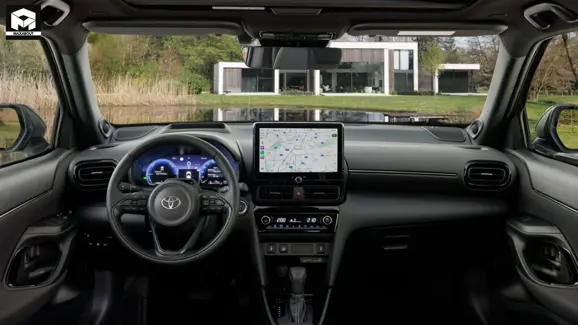 The centrepiece is a larger touchscreen infotainment display — early details suggest an upgrade over the outgoing model, with improved responsiveness and wireless Apple CarPlay and Android Auto included. For most Indian buyers, those two features alone settle a lot of arguments at the dealership. The interface looks clean from what's been shown, though whether it holds up under sustained Indian summer heat remains to be seen in real-world use.
Material quality appears competitive but not class-leading. Soft-touch surfaces appear on key contact points, but expect some hard plastics in the lower cabin areas — that's honestly true of most vehicles in this segment, including European rivals. Toyota hasn't tried to disguise this, which is at least honest positioning.
The GR Sport variant adds sportier interior elements — contrast stitching, unique seat upholstery, and GR badging throughout. It lifts the cabin's visual energy noticeably. Whether that justifies a premium over the standard variants depends entirely on how much you value aesthetics versus pure practicality.
On the technology side, Toyota Safety Sense is where the Yaris Cross genuinely pulls ahead of many competitors in this space. The suite typically includes pre-collision warning with pedestrian detection, lane departure alert, automatic high beam control, and radar cruise control on higher trims. For highway driving on routes like Mumbai-Pune or Delhi-Jaipur, these features add real-world confidence — not just spec-sheet bragging rights.
Connected car features are expected to include remote vehicle monitoring, geofencing, and service reminders through a dedicated app. Segment-standard at this point, honestly, but well-implemented based on Toyota's recent track record with connected systems.
Practicality is where Indian families will pay close attention. Rear seat space looks adequate for three adults on shorter urban trips, though taller passengers may feel the roofline slightly on longer journeys. Boot capacity appears generous for the segment — important for families loading up for weekend getaways or airport runs. Storage pockets, door bins, and the centre console look well-thought-out, though official dimensions haven't been confirmed yet.
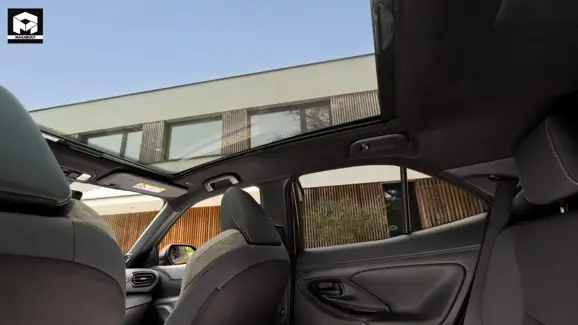 Where Toyota plays it conservative is in the absence of a larger panoramic sunroof at this stage — a feature Indian buyers increasingly expect at this price bracket, and one that rivals have been offering aggressively. It could become a genuine talking point at showrooms.
India Launch Prospects: Pricing Expectations and Competitive Positioning
So, will the Yaris Cross actually make it to India? Honestly, the signs look encouraging. Toyota has been on a confident expansion streak here — the Hyryder has found genuine traction, and the Innova HyCross proved that Indian buyers are willing to pay a premium for a Toyota badge backed by strong hybrid credentials. That momentum matters.
The most realistic entry route would be as a CBU import initially, helping Toyota test buyer appetite before committing to local assembly. If demand builds — and based on observable segment patterns, it likely would — a CKD or full localisation path could follow within two to three years. This is roughly how the brand has approached similar launches before, according to industry observations.
On pricing, this is speculative but grounded in segment logic. A CBU entry would realistically land somewhere between ₹18 lakh and ₹22 lakh, depending on import duties and variant positioning. If localisation happens eventually, expect that floor to drop toward ₹15 lakh, making it directly competitive.
That competitive landscape is genuinely interesting. The Hyundai Creta, Kia Seltos, Honda Elevate, and Maruti Grand Vitara all occupy this space — but the Yaris Cross would enter with a distinct hybrid-first identity that none of them fully match. That could be its clearest differentiator in a crowded room.
Pros and Cons: An Honest Assessment of the 2026 Yaris Cross
Every car has a story worth telling honestly. And the Yaris Cross, for all its polish, is no exception. So let me break this down as clearly as I can.
Where it genuinely impresses: Toyota's reliability reputation alone carries serious weight in India. Owners of older Corollas and Fortuners will tell you the same thing — these cars just keep running. Pair that with a proven hybrid system and you have something genuinely compelling for city commuters battling fuel costs daily. The fresh exterior design is another win. It looks contemporary without being aggressive, and the GR Sport variant adds just enough visual drama to attract younger buyers who want something that stands apart in a parking lot.
Safety technology also looks strong on paper — assuming Toyota brings the full suite rather than trimming it for cost.
Where I have genuine concerns:
Pricing could feel steep if features get diluted at lower variants
No confirmed India launch timeline makes planning difficult
The GR Sport is primarily a styling package — performance enthusiasts should manage expectations accordingly
Highway-heavy users in states like Rajasthan or Madhya Pradesh may miss a diesel option
Who is this best suited for? Honestly, the urban professional who values fuel efficiency, brand trust, and design — but isn't chasing outright driving thrills. If that sounds like you, the Yaris Cross deserves serious consideration.
Final Verdict: Should Indian Car Buyers Be Excited About the Yaris Cross?
Honestly? Yes — but with measured expectations. The 2026 Yaris Cross isn't a revolution. It's a confident, well-considered update from a brand that rarely makes reckless moves. And in a market that often rewards reliability over drama, that approach might actually work in Toyota's favour.
The fresh exterior, the GR Sport variant, and the refined hybrid system signal that Toyota is paying attention to what buyers want. Design ambition combined with proven hybrid efficiency is a genuinely compelling package — especially as fuel costs continue to bite across Indian cities.
Is Toyota doing enough to stay competitive? I think they're on the right track, but the pressure is real. Rivals are moving fast, and Indian buyers are increasingly sophisticated. A confirmed India launch, competitive pricing around the ₹20–25 lakh range, and a strong service network would make this a serious contender.
For now, no official India timeline exists. But keeping this one on your radar makes complete sense. If you value long-term ownership peace of mind, strong fuel efficiency, and a vehicle that looks genuinely premium without overreaching — the Yaris Cross is worth the wait.
Optimistic, but not blindly so. That's exactly where this one sits.
Explore the story
Related news

Share your view and join the discussion.
Earn reward points for every comment and get a chance to win ₹1,000 in our weekly lucky draw. Sign in with Google in one tap.
Start the conversation
No one has commented on this article yet. Be the first to share your view.
Want to read more automotive news?
Stay updated with the latest car launches, reviews, and industry insights.
Browse All News