
2026 Skoda Slavia Facelift Spied Testing in India
Spy shots of test mules rarely get my attention these days. But when a camouflaged 2026 Skoda Slavia facelift was recently caught testing on Indian roads, that was genuinely worth paying attention to. This is not just another routine update to an obscure model. The Slavia sits in one of the most fie...
Editorial Team
Spy shots of test mules rarely get my attention these days. But when a camouflaged 2026 Skoda Slavia facelift was recently caught testing on Indian roads, that was genuinely worth paying attention to. This is not just another routine update to an obscure model. The Slavia sits in one of the most fiercely contested segments in the Indian market, and any meaningful refresh here has real implications.
For existing Slavia owners, this sighting is a mixed bag of emotions. On one hand, it confirms the car's future in India. On the other, it raises the familiar question — did I buy too soon? For those who have been sitting on the fence, waiting to see what Skoda does next, this is precisely the kind of signal worth watching.
The mid-size sedan space right now is genuinely interesting. The Slavia goes up against strong competition, and the pressure to stay relevant is real. From what the spy shots reveal, Skoda appears to be taking this update seriously rather than just shuffling minor cosmetic changes onto the existing car.
Details are still limited, of course. But even with heavy camouflage, there is enough visible to start a meaningful conversation about where this facelift might be headed.
What the Spy Shots Reveal: Exterior Changes on the 2026 Slavia Facelift
The test mule caught on camera is wearing camouflage in all the right places — and that itself tells a story. Heavy wrapping around the front fascia and the rear end suggests Skoda is not simply refreshing badge placement. Something more deliberate is happening at both ends of the car.
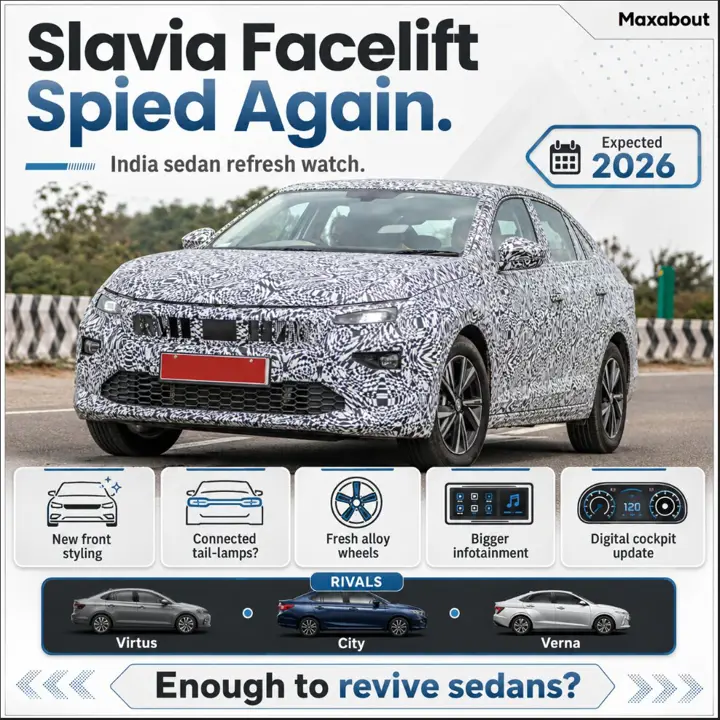 Up front, the camouflage suggests a revised bumper structure with reshaped air intake sections. The headlamp clusters appear slimmer in profile, which would align with the direction Skoda has taken on the updated Octavia and the latest Superb — both of which moved toward sharper, more horizontal lamp signatures. If the Slavia follows that same visual language, expect LED daytime running lights that sit lower and stretch wider than the current design.
The grille area is harder to read under the wrap, but based on what is visible, the overall front end looks wider and more planted. Skoda's recent global updates have consistently pushed toward a cleaner, more angular face — less chrome fussiness, more structured geometry.
At the rear, the tail lamp shape appears to have changed. The camouflage around that section is particularly dense, which usually means the redesign there is significant enough to hide carefully. A connected light bar running across the boot lid seems plausible, given how common that treatment has become across Skoda's current lineup.
The side profile, from what is visible, looks largely unchanged — the roofline and greenhouse seem carried over. Facelift logic rarely touches the body structure itself.
Expected Interior and Feature Upgrades: Will Skoda Finally Address the Complaints?
Step inside the current Slavia and the exterior's premium promise starts to feel a little hollow. The dashboard is clean, sure, but clean can quickly read as sparse when you're spending upward of ₹15 lakh. Indian buyers and reviewers have consistently flagged this — the infotainment screen feels modest for the segment, ventilated seats are absent entirely, and wireless charging is missing from lower variants. These aren't minor quibbles. At this price point, the Honda City and Hyundai Verna have raised expectations considerably.
From what industry sources suggest, the facelift interior could see meaningful upgrades. A larger touchscreen — likely jumping to a 10-inch or 10.25-inch unit — seems almost certain given competitor pressure. The Verna's dual-screen setup has set a new visual benchmark, and Skoda would be aware of how that comparison plays out in showrooms.
Given the competition, it would make sense for Skoda to add ventilated front seats and wireless charging across more variants, not just the top trim. A sunroof — or panoramic sunroof in a new variant — is also a reasonable expectation. Indian buyers have made it very clear that a sunroof often decides the purchase.
The instrument cluster could also receive an update, possibly going fully digital. Whether Skoda addresses all these gaps or just some of them will define how seriously they're taking the mid-cycle refresh.
Powertrain Options: Will the Engine Lineup Change for the Facelift?
Beyond the interior upgrades, buyers are naturally curious about what sits under the bonnet. The current Slavia runs two familiar options — the 1.0-litre TSI producing around 115 PS, and the more capable 1.5-litre TSI with cylinder deactivation at 150 PS. Both have generally earned positive feedback from reviewers and owners alike.
Facelifts rarely bring entirely new engines. More often, manufacturers fine-tune calibration, improve NVH levels, or adjust gearing for better real-world efficiency. I think that's likely what Skoda will do here rather than introducing a completely different powertrain.
That said, the conversation around mild hybrid assistance is growing louder in India's automotive space. With emission norms tightening and competitors gradually moving toward electrification, Skoda may feel some pressure to respond. Whether that translates into actual hardware changes for this facelift is uncertain, but it's worth watching.
From what highway reviews suggest, the 1.5 TSI performs confidently on stretches like the Delhi-Jaipur or Bengaluru-Mysuru corridors. In city traffic — think Bengaluru peak hours or Mumbai's stop-and-go conditions — the cylinder deactivation system genuinely helps fuel efficiency, reportedly delivering close to 14–16 km/l under mixed conditions.
For daily commuters, that number matters considerably. The powertrain staying largely unchanged isn't necessarily disappointing — it just needs to remain competitive.
How the 2026 Slavia Facelift Stacks Up Against Mid-Size Sedan Rivals in India
The mid-size sedan segment in India is genuinely competitive right now, and the Slavia is entering a facelift cycle with some real pressure on its shoulders. The Honda City, Hyundai Verna, and even its platform-sharing sibling, the Volkswagen Virtus, are not standing still. So where does the Slavia actually win — and where does it still struggle?
On driving dynamics, the Slavia remains one of the most composed cars in this segment. The suspension tuning handles broken roads around Pune's older localities or Delhi's patchwork inner-city stretches noticeably better than the Verna's softer setup. Build quality is another strong point — the doors close with a solidity that buyers in this price bracket genuinely appreciate.
However, the after-sales reality is harder to ignore. Skoda's service network, while improving, still leaves buyers in tier-2 and tier-3 cities in a difficult spot. If you're based in Coimbatore or Bhopal, finding a reliable authorised service centre is not as straightforward as it is for Honda or Hyundai owners. Parts costs and labour charges are also meaningfully higher over time.
The Verna, meanwhile, counters with a feature-rich interior that feels genuinely premium — panoramic sunroof, ADAS features, and a wider touchscreen experience that many buyers find hard to overlook. For buyers who prioritise technology over driving feel, the Verna remains the easier recommendation.
Honestly, a facelift alone may not be enough to swing buyers who have already factored in ownership costs. The Slavia makes the most sense for someone who values the driving experience and already lives near a Skoda service point.
Skoda's After-Sales Network and Ownership Costs: The Real Concern for Indian Buyers
This is where the conversation gets uncomfortable for Skoda enthusiasts. The driving experience is genuinely excellent — most people who have spent time with the Slavia will tell you that. But ownership is a longer commitment than a test drive, and that's where Skoda still struggles to fully convince buyers outside major metros.
Skoda's India 2.0 strategy has made real progress. The brand has expanded its dealer footprint and introduced more transparent service packages. From what industry reports suggest, Skoda now has a presence in several Tier 2 cities that were previously underserved. That is a genuine improvement worth acknowledging.
But here's the honest reality — if you live in Coimbatore, Nagpur, or Bhubaneswar, the nearest authorised service centre might still be an inconvenient distance away. Compare that with Maruti or Hyundai, where you often have multiple authorised workshops within the same city, sometimes within the same neighbourhood. That difference matters enormously when your car needs attention.
Ownership costs are another factor worth thinking through carefully. Periodic maintenance on the Slavia runs noticeably higher than equivalently priced Hyundai or Maruti products. Wider tyre profiles on higher variants add to replacement costs. Insurance premiums on European cars tend to reflect their higher parts valuation. None of this makes the Slavia a bad choice — but it makes it a considered choice, best suited for buyers who go in fully informed.
Expected Launch Timeline and Pricing: When Should You Expect the 2026 Slavia Facelift?
Based on where the test mules appear to be in their development cycle, a mid-2025 global reveal seems plausible, with an India launch likely following toward late 2025 or early 2026. Skoda typically staggers its India introductions a few months after European debuts, and there is little reason to expect a different approach here.
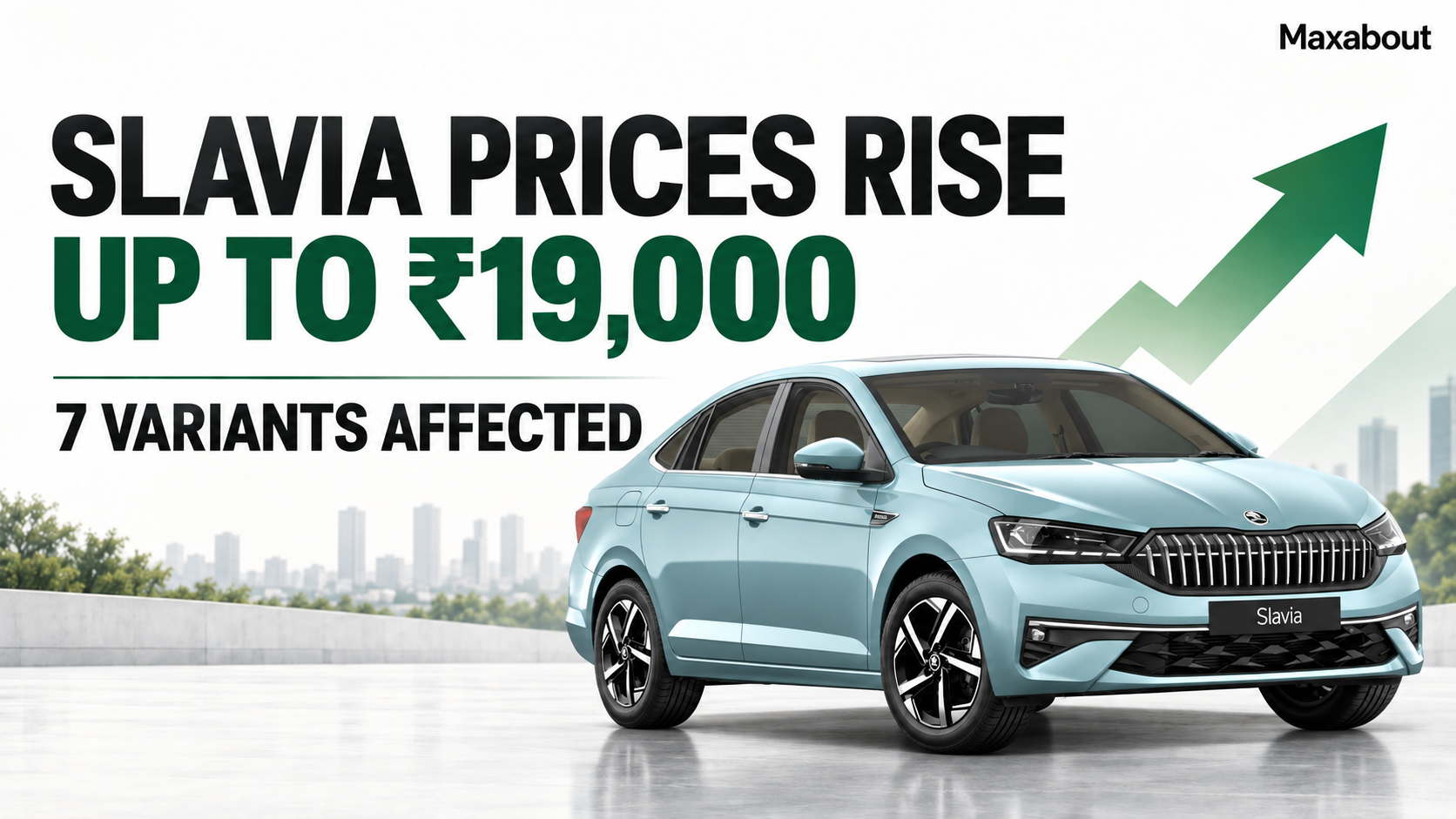
On pricing, Skoda has rarely been shy about modest upward revisions with each product update. The current Slavia range sits between roughly ₹11 lakh and ₹19 lakh. A facelift, especially one introducing updated technology or a refreshed variant structure, could push that ceiling closer to ₹20 lakh or slightly beyond. Whether the entry point remains accessible is the real question.
Now, the practical advice. If your need is immediate — you are changing a vehicle, your current one is giving trouble, or a good deal is on the table — buy the current Slavia now. It remains a strong product and depreciation on a facelift wait rarely justifies the delay. However, if you are comfortable waiting six to nine months and want the latest iteration, holding out makes reasonable sense. Just avoid waiting indefinitely. Facelifts have a way of arriving later than early spy shots suggest.
Should You Wait for the 2026 Skoda Slavia Facelift or Buy Now? My Take
Look, at the end of the day, this entire conversation is built on spy shots and educated guessing. No official word from Skoda India, no confirmed spec sheets, no launch timeline. So take every expectation here — including mine — with a reasonable degree of skepticism.
That said, what the spy shots do suggest is genuinely encouraging. If Skoda addresses the infotainment criticism, refreshes the interior meaningfully, and brings sharper styling, the facelift could be a compelling answer to the updated Verna and City. Those actively comparing the Slavia against its rivals should probably wait and see.
For everyone else? The current Slavia is not a flawed car waiting to be rescued. It drives beautifully, holds up well on broken roads, and the service network has matured. If a strong exchange offer or end-of-year discount lands in front of you, that is a real benefit worth considering seriously.
I am genuinely curious what would tip the scales for you. What single feature — a larger screen, a sunroof upgrade, better ambient lighting, or something else entirely — would make you choose the Slavia facelift over the competition? Drop your thoughts below. These conversations always help others who are sitting on the fence, and honestly, I enjoy reading them too.
Explore the story
Related news
Share your view and join the discussion.
Earn reward points for every comment and get a chance to win ₹1,000 in our weekly lucky draw. Sign in with Google in one tap.
Start the conversation
No one has commented on this article yet. Be the first to share your view.
Want to read more automotive news?
Stay updated with the latest car launches, reviews, and industry insights.
Browse All News