
2026 Bajaj Dominar 400: 350cc Engine, ₹37,000 Price Drop
Something genuinely unusual happened in the Indian two-wheeler market recently. Bajaj launched a new Dominar 400 that actually costs less than the model it replaces. By ₹37,000, to be precise. In a segment where prices seem to climb every time a manufacturer sneezes, this feels almost counterintuiti...
Editorial Team
Something genuinely unusual happened in the Indian two-wheeler market recently. Bajaj launched a new Dominar 400 that actually costs less than the model it replaces. By ₹37,000, to be precise. In a segment where prices seem to climb every time a manufacturer sneezes, this feels almost counterintuitive.
Here's the twist though — the price drop comes with a smaller engine. The 2026 Dominar 400 now runs a 350cc unit instead of the outgoing 373cc motor. On paper, that sounds like a straightforward downgrade. But spend a little more time with the details, and the picture gets more interesting.
Since its debut in 2017, the Dominar 400 has carved out a genuine identity among Indian touring enthusiasts. It was never the flashiest option, but it offered something practical: a capable, muscular-looking motorcycle that could handle long highway stretches without draining your savings. Riders from Pune to Guwahati took it seriously as a proper tourer.
So when Bajaj quietly reshuffles the engine and drops the price simultaneously, it raises a fair question — is this smart engineering or strategic cost-cutting dressed up cleverly? I find myself genuinely curious about the answer. Let's think through this together.
What Exactly Changed: The 350cc Engine Swap Explained
The most significant change under the skin is straightforward: Bajaj has retired the long-serving 373cc liquid-cooled, single-cylinder engine and replaced it with a 350cc unit believed to share its platform architecture with other Bajaj 350cc offerings in the current lineup. That's the core of this entire story.
On paper, the numbers shift slightly downward. The outgoing 373cc motor produced around 40PS and 35Nm. The incoming 350cc engine is reported to deliver figures marginally below that — early specifications suggest approximately 37-38PS range, with torque figures similarly trimmed. Not dramatically different, but measurably reduced.
The cooling system change is worth paying attention to. The original Dominar 400 wore its liquid-cooling setup as a genuine badge of engineering seriousness. The new 350cc unit is expected to use an air-oil cooled configuration — functional and proven, but a step back in thermal management terms, particularly during prolonged highway running in intense Indian summer conditions.
Why did Bajaj make this decision? Industry observers point to parts commonality and cost rationalisation as the primary drivers. Sharing engine platforms across multiple models reduces manufacturing complexity considerably. From a business standpoint, that logic is completely sound.
Reviewers who've experienced the new engine describe it as smooth and adequately responsive in real-world conditions — not a dramatic downgrade, but noticeably different in character from the rev-happy 373cc unit enthusiasts respected.
Breaking Down the ₹37,000 Price Cut: Where Does the Saving Come From
So where exactly does that ₹37,000 reduction come from? It's a fair question, and the answer isn't just "smaller engine equals cheaper bike." It's actually a combination of factors that add up in a meaningful way.
A 350cc engine, by design, requires fewer complex internal components compared to a higher-displacement unit. Simpler cooling requirements, lower material costs on pistons and cylinder architecture, and reduced engineering tolerances all contribute incrementally. None of these savings are dramatic in isolation — but collectively, they shift the manufacturing cost picture noticeably.
The honest question worth raising here: is Bajaj genuinely passing savings to buyers, or is this partly a response to slowing sales? The middleweight touring segment — particularly the 300-400cc space — has been under pressure. Buyers have been hesitant, and the Dominar 400 was arguably priced just slightly beyond comfortable reach for many.
In that context, a ₹37,000 price reduction is genuinely significant. For buyers who were watching the Dominar but couldn't quite justify the previous price point against rivals in the ₹2–2.5 lakh bracket, this reopens that conversation entirely. Competitors in this space now have to respond to a Dominar that's both more accessible and backed by Bajaj's established service network across India.
Realistically, it's probably both — cost rationalisation and a deliberate market repositioning move working together.
What Stays the Same: The Dominar DNA That Made It Popular
Here's what matters most to anyone considering this bike — Bajaj hasn't quietly gutted the Dominar to justify that lower price tag. From everything that's been confirmed so far, the core identity of this motorcycle remains very much intact.
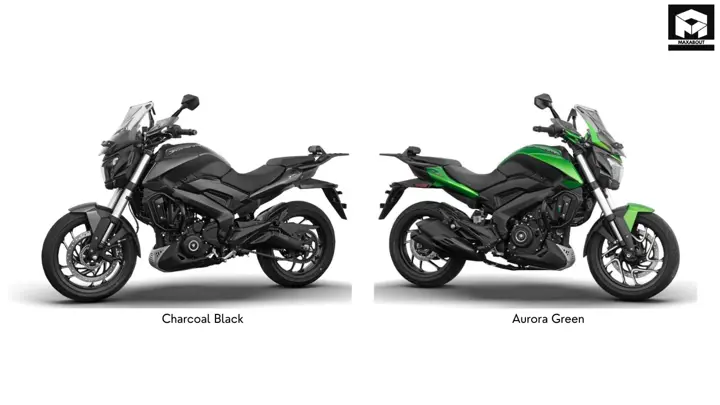
The design is immediately recognisable. That muscular, semi-faired tourer stance — broad shoulders, the chunky front end, the aggressive headlamp assembly with full LED lighting — it's all still there. The Dominar always looked like it meant business, and that hasn't changed. If anything, the front fascia continues to be one of the more distinctive faces in this segment.
Mechanically, the reassurance continues. The USD front forks, which genuinely set the Dominar apart at its price point when the bike first launched, remain in place. So does the dual-channel ABS and the overall suspension geometry that made those long highway stretches — think the coastal roads toward Goa or the winding sections around Coorg — feel composed rather than exhausting.
The twin-pod instrument cluster, Bluetooth connectivity, and turn-by-turn navigation compatibility are also retained. These features built the Dominar's reputation as a credible touring tool, not just a good-looking commuter. Bajaj appears to understand that stripping them out would have undermined the entire proposition.
Essentially, what you're losing is 50cc. What you're keeping is the Dominar experience.
Real-World Performance on Indian Roads: Will the 350cc Engine Hold Up?
This is the question that matters most. You can accept a spec sheet change. You can accept a price cut. But if the 350cc engine makes the Dominar feel stressed or breathless at 90 kmph on NH48, the whole exercise falls apart.
The good news, based on early test ride impressions, is that the engine feels surprisingly capable at highway-legal speeds. Sustained cruising between 80-100 kmph appears reasonably relaxed, with the motor not feeling like it's being pushed to its limits. That matters enormously for a motorcycle that positions itself as a touring machine.
The ghat question is more nuanced, though. Think Kasara Ghat, the climbs approaching Manali, or the relentless switchbacks on Sikkim routes. Loaded with panniers and a pillion, the reduced displacement could mean more frequent downshifting on steep gradients compared to the 373cc unit. It is a genuine concern worth acknowledging honestly.
Where the smaller engine might actually work in your favour is fuel efficiency. From what reviewers have noted, real-world economy could improve meaningfully — potentially touching 28-32 kmpl in mixed conditions. On a long touring run, that adds up.
NVH levels reportedly remain controlled, with vibrations at highway speeds feeling acceptable rather than intrusive. The engine refinement, it seems, has been prioritised carefully.
How the 2026 Dominar 400 Stacks Up Against Its Rivals
With pricing now closer to ₹2.2 lakh (ex-showroom), the Dominar 400 finds itself in genuinely interesting territory. It is no longer competing purely upward — it is now squarely challenging mid-segment options that buyers in this price bracket would seriously consider.
The Royal Enfield Hunter 350 and Classic 350 are the obvious reference points. They carry strong brand sentiment, excellent resale value, and a loyal ownership community. But they are fundamentally leisure-oriented machines. The Dominar brings a more performance-focused character — sharper ergonomics for long-distance covering, a more aggressive power delivery, and hardware that feels genuinely sport-touring rather than retro-casual.
Against KTM's 250 Duke, the Dominar offers more touring capability at a comparable price point. The KTM feels sharper in city conditions, no question. But if your weekend involves a 400-kilometre run toward Coorg or Spiti, the Dominar's stance and tank range start making more practical sense.
Where Bajaj holds a distinct, underappreciated advantage is its service network. From Pune to Patna, Ranchi to Rajkot — authorised service centres exist in tier-2 and tier-3 cities where finding a KTM-trained mechanic can become genuinely stressful. Spare parts availability is reliable, and costs remain reasonable.
This bike is realistically best suited for three buyers: someone upgrading from a 150-200cc commuter who wants real touring capability, a weekend rider who values performance without premium pricing, and the budget-conscious long-distance enthusiast who cannot stretch toward ₹3 lakh territory.
Should You Buy the 2026 Dominar 400: Honest Verdict
Here is the straightforward answer: this is a good bike, but only if you are buying it on its own terms. Do not walk into a Bajaj showroom expecting the outright punch of the older 373cc motor. The 350cc engine is a genuine trade-off, and experienced Dominar riders will feel it, particularly during hard overtakes on national highways.
For a first-time buyer in this segment, though, that trade-off barely registers. What you get instead is a well-rounded touring package with modern features, solid build quality, and a service network that actually works when you are 400 kilometres from home.
If you are stretching toward ₹2 lakh and were previously priced out, this ₹37,000 reduction changes the conversation meaningfully. That is a real difference for a young buyer managing EMIs carefully.
The bigger picture is worth acknowledging. Bajaj has essentially reopened the Dominar 400 to an entirely new wave of Indian touring enthusiasts who were quietly looking elsewhere. That is a smart move, and the market will likely respond positively.
Buy it for what it genuinely is — an accessible, capable touring motorcycle — and it will rarely disappoint you.
Explore the story
Related news

Share your view and join the discussion.
Earn reward points for every comment and get a chance to win ₹1,000 in our weekly lucky draw. Sign in with Google in one tap.
Start the conversation
No one has commented on this article yet. Be the first to share your view.
Want to read more automotive news?
Stay updated with the latest car launches, reviews, and industry insights.
Browse All News