Maini Reva

General information and overview
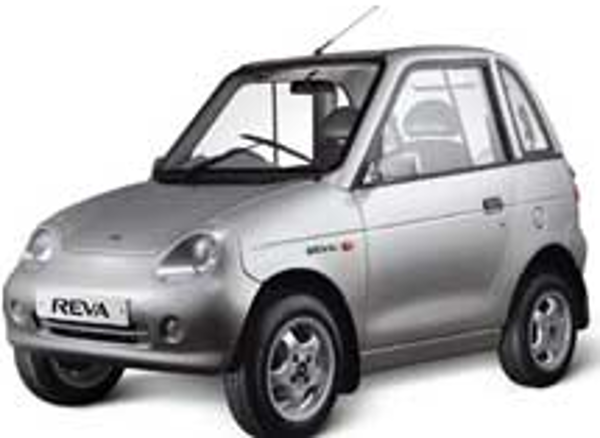
The Maini Reva is a small two‑/four‑seat electric city car originally launched in India in the early 2000s, powered by a roughly 13–17.4 kW (around 17 bhp) electric motor fed by lead‑acid (early) or later lithium battery packs, with a kerb weight around 650–830 kg, ground clearance near 150 mm and a compact footprint (length 2638 mm, width 1324 mm) intended for tight urban streets. The car’s strengths are very low running costs, simple automatic driveability and zero tailpipe emissions, while its compromises are low top speed (65–80 km/h), limited range compared with modern EVs, basic safety and creature comforts, and potential battery ageing issues that affect usable range and ownership cost.
The Maini Reva is a small, two/occasionally four‑seater urban electric hatch originally launched in India in the early 2000s and later developed into the REVA i family; it uses a 13–17.4 bhp electric motor with early models fitted with multiple lead‑acid batteries (48V, 200Ah setups) producing modest acceleration, a top speed typically between 65–80 km/h and a nominal range around 80 km on a full charge, while later L‑ion variants improved range to about 120 km. The car is extremely compact (length 2,638 mm, width 1,324 mm, wheelbase 1,710 mm) and light, which helps city manoeuvrability and parking but its safety and equipment are basic by modern standards. Charging from a domestic 15A socket takes several hours, and operating costs are low compared with petrol cars, though maintenance and usable range hinge critically on battery chemistry and condition. If you prioritise minimal running cost, easy urban parking and a straightforward electric driving experience for short daily trips within Indian cities, the Maini Reva remains a pragmatic, historically significant option; if you need higher speeds, longer range or modern safety and connectivity, contemporary small EVs are the better alternative.
Expert opinion and recommendation
I find the Maini Reva to be a historically important, city‑focused electric microcar that makes sense only for very specific, low‑speed urban use; it is compact, simple to operate and extremely cheap to run compared with petrol cars, but its modest 17–18 bhp motor, limited top speed (around 65–80 km/h) and short real‑world range (roughly 60–100 km depending on battery type and condition) mean I would recommend it only if your daily driving is well within its range and you value minimal running costs over performance or modern safety/comfort features.
I find the Maini Reva to be a landmark city electric car that still makes sense for very specific urban use-cases in India — it is compact, simple to operate and extremely cheap to run, but its dated performance, basic equipment and limited range confine it to short daily commutes rather than long trips. I appreciate its manoeuvrability and low running costs for congested Indian cities, where 65–80 km/h top speed and roughly 80 km nominal range are adequate for many errands and last-mile use. At the same time, I note the heavy, older lead‑acid battery technology used in early Maini Reva models reduces usable range, adds weight and requires more maintenance than modern lithium packs, which makes the car less practical compared with contemporary small EVs if you need higher daily mileage or faster charging. For buyers focused on outright affordability, emissions-free inner-city commuting and ease of parking, the Reva remains an interesting choice; for those wanting modern performance, safety and longer range, I would recommend looking at newer EVs instead.
Recent news and announcements
Chetan Maini, the founder of Reva Electric Car Co, has been working on his new venture, Sun Mobility, which aims to revolutionize urban transport with smart battery swapping technology for electric autorickshaws. This innovation could significantly enhance the adoption of electric vehicles by addressing charging infrastructure challenges. I think this could be a game-changer for urban mobility in India.
Chetan Maini stepped down as the CEO of Mahindra Reva Electric Vehicles in 2015, after being at the helm for two decades. He was replaced by Arvind Mathew, former Ford India president and managing director. Maini remained a shareholder and expressed his confidence in the companys future growth. I believe his departure marked a significant transition for the company.
Mahindra Reva launched the e2o, a four-seater electric car, in March 2013. The e2o was designed to offer a range of 100 km on a full charge and was seen as a major step forward in Indias electric vehicle market. This launch was a significant milestone for Mahindra Reva.
Mahindra Reva signed a Memorandum of Understanding (MoU) with the Government of Victoria, Australia, to collaborate on research and development in electric vehicle technology. This partnership aimed to enhance innovation and industrial applications in the EV field. I believe such international collaborations are crucial for technological advancements.
Chetan Maini was named the first entrepreneur-in-residence at Swinburne University of Technology in Melbourne, Australia. This role involved collaborating with the universitys faculty and research centers to advance electric vehicle technology. This recognition underscored Mainis influence in the EV sector globally.
Pricing details and changes
The last recorded ex‑showroom prices for the Reva i in India were in the range of about Rs.2.88 lakh for the base i Standard to roughly Rs.3.50–3.76 lakh for higher trims when it was sold new, with some regional and variant variation reported in archived listings. On‑road costs today for a used Maini Reva will vary by city because insurance, registration transfer, state EV incentives (where applicable) and road tax differ, and because older Reva models often require battery replacement or refurbishment which can be the largest outlay when purchasing—lead‑acid battery packs were original equipment and reconditioning or upgrading to lithium packs is a common expense buyers must budget for beyond the purchase price.
The last recorded ex‑showroom price for the Maini Reva (REVA i series) in Delhi was around ₹2.88 lakh for the base i Standard, with mid and top trims (i A/C and i Classe) recorded near ₹3.50 lakh and ₹3.76 lakh respectively. On‑road prices in India will be higher after state registration, road tax, insurance and any local EV subsidies or incentives are applied, so a buyer in a major city should budget an additional 10–20% over ex‑showroom depending on state rules and insurance choices, taking an on‑road estimate to roughly ₹3.2–4.5 lakh in many cases. I treat these figures as historic guidance because the Maini Reva was discontinued as a mainstream new model and much of the market now deals in pre‑owned examples where pricing depends on battery condition, age and service history — a well‑maintained unit with healthier batteries commands a premium, while cars with degraded lead‑acid packs will be significantly cheaper but costlier to run and maintain. If you are considering purchase, verify the exact variant, battery chemistry and state incentives and get an inspection focused on battery health before committing.
Fuel efficiency information
The official/claimed range for the Reva i is about 80 km per full charge for lead‑acid versions and higher for later Li‑ion variants, but I observe real‑world usable range is typically lower—plan for 50–80 km daily depending on battery condition, climate and driving style, and factor in electricity cost plus eventual battery replacement when judging running costs.
The REVA i’s nominal ARAI range is about 80 km per full charge for lead‑acid equipped units and up to 120 km for later lithium‑ion variants under ideal conditions; real‑world range is typically lower and depends on battery type, driving speed, load and climate control use. I recommend basing purchase decisions on measured daily driving needs: if your daily round trip is under 50–60 km and you can charge overnight, the Reva’s running cost advantage and low per‑km electricity cost make it economical; if you regularly exceed that, seek a modern EV with higher usable range and faster charging.
Specifications
- Maximum Power
- 17.4bhp
- Maximum Torque
- 7kgm
- Top Speed
- 65
- Kerb Weight
- 740.00 kg
Pros(4)
Smooth Acceleration
Effortless and gradual increase in speed
Responsive Braking
Quick and efficient deceleration when brakes are applied
Excellent Mileage
Good Mileage
Cons(5)
No Automatic Transmission
Underpowered Engine
Doubtful Build Quality
Permanently Discontinued
Limited Sales & Service Outlets
Pricing Information
Ex-showroom prices across different cities
Ex-showroom price
No pricing information available for the selected cities.
User Reviews
Real experiences from Maini Reva owners
Based on 0 rated reviews
Rating Distribution
No reviews found
Be the first to review Maini Reva
User Discussions
Ask questions and get answers from the community
No questions yet
Be the first to ask a question about Maini Reva
Popular Comparisons
See how Maini Reva compares with other vehicles
No comparisons found
There are no popular comparisons available for Maini Reva at the moment.
Comparisons will appear here as they become available.
All Variants
Explore all variants of Reva
Complete Specifications
Maini Reva
- Overall Length
- 2638 mm
- Overall Width
- 1324 mm
- Overall Height
- 1510 mm
- Wheelbase
- 1710.0 mm
- Kerb Weight
- 740.00 kg
- Maximum Power
- 17.4bhp
- Maximum Torque
- 7kgm
- Engine Details
- 48V, 200Amp, Lead Acid Batt.
- Car Type
- Hatchback
- Fuel Type
- Electric
- Top Speed
- 65
- Electronic Brake Distribution (EBD)
- Anti-lock Braking System (ABS)
- Electronic Stability Program (ESP)
- Traction Control
- Seating Capacity
- 2
- Leather Seats
- Folding Rear Seats
- Rear Centre Armrest
- Driver Seat Adjustment
- Manual
- Alloy Wheels
- Music System
- Xenon Headlamps
- Front Fog Lights
- Darkness Sensing Headlamps
- ORVM Turn Indicators
- Brakes
- Front Disk, Rear Disk
- Suspension
- NA
- Trip Distance
- 2
- Tachometer
- Steering Adjustment (Rake)
- Steering Mounted Controls
- Rear AC Vents
- Remote Fuel Filler
- Steering Adjustment (Reach)
- Air Conditioner
- Power Steering
- Normal
- Rear Defogger
- Rear Washer & Wiper
- Rain Sensing Wipers
- Power Windows
- Remote Boot Release
- Parking Sensors
- Body Coloured Bumpers
- Outside Rear-view Mirrors
- Driver Side
- Tinted Glass
- Sunroof
- Central Locking
- None
Expert Verdict
Professional reviews and expert opinions on Maini Reva
No content available for Models.ExpertReviews at the moment
Share real ownership experiences, ask questions, and help other buyers decide.
Earn reward points for every comment and get a chance to win ₹1,000 in our weekly lucky draw. Sign in with Google in one tap.
Start the conversation
No one has commented on the Maini Reva yet. Your experience or question could help the next buyer.
Explore the color options available for Maini Reva
No color options available
Color information for this vehicle is not currently available in our database.
Maini Reva Images & Videos (1)
Watch reviews, test drives and walkarounds of Maini Reva
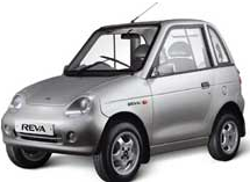
Maini Reva Standard
Latest Automotive News
Stay updated with the latest happenings in the automotive world
Most Popular Cars
Based on Cars Popular on Autos
Recently Added Cars
New Cars Added On Autos